

Italy should never be treated like an ordinary national team in a World Cup betting market.
The Azzurri have four World Cup titles, a deep football culture, and one of the most recognizable shirts in the sport. That kind of history can pull bettors toward nostalgia before they ever look at the current team. But modern betting markets do not pay out for old trophies. They react to form, structure, coaching clarity, player development, qualification paths, and whether a team actually knows what it wants to be.
That is why Italy’s recent coaching uncertainty is such a useful lesson for World Cup bettors. When a national team is caught between reputation and reality, futures prices can become tricky. A big name can create attention. A tactical idea can create hope. But the question for bettors is simpler and colder: does the team have an identity strong enough to justify the price?
Italy’s coaching debate, including reports around Guardiola’s potential Italy appointment, is not just a football gossip story. It is a reminder that bettors need to price national teams based on what they are becoming, not what they used to be.
Why Team Identity Matters More Than The Coach’s Name
A famous coach can move conversation before he changes performance.
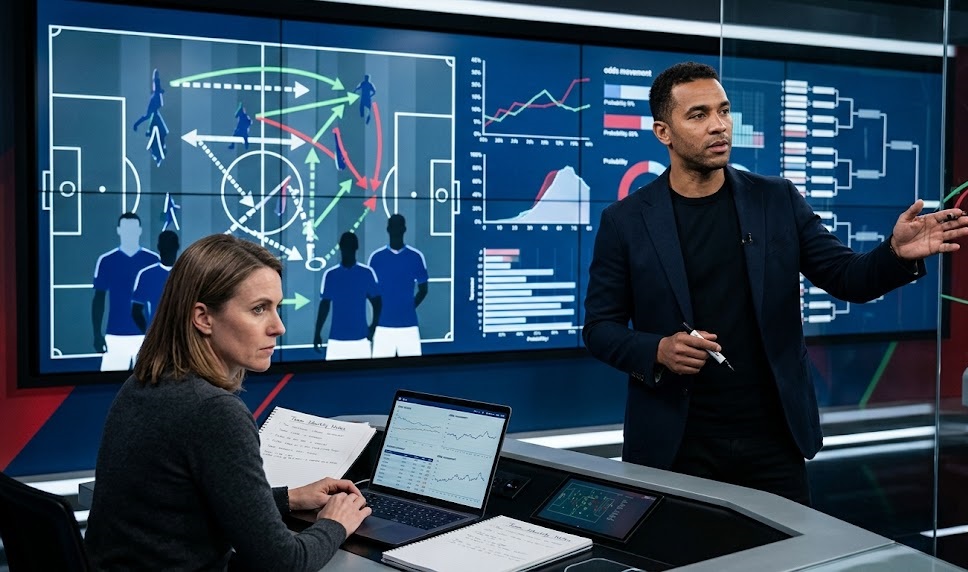
Pep Guardiola’s name carries obvious weight. His Barcelona, Bayern Munich, and Manchester City teams made positional play, control, pressing, and structured attacking football part of the modern tactical language. So when a name like that gets attached to Italy, even hypothetically, bettors immediately start imagining a reset.
But futures betting is not built on imagination. It is built on probability.
A national-team coach has far less time than a club coach. There are fewer training sessions, less tactical repetition, and limited control over player development. Even the best coach in the world cannot instantly turn a confused player pool into a tournament-ready machine.
That is why bettors should separate manager reputation from team identity. Reputation is the headline. Identity is the repeatable pattern.
Does the team press high or defend deep? Does it build through midfield or attack directly? Does it have reliable chance creation? Does the back line suit the coach’s preferred style? Does the squad have enough speed, balance, and fitness to execute the plan under World Cup pressure?
Those questions matter more than the name on the bench.
Italy Is A Perfect Warning Against Badge-Based Betting
Italy’s badge still carries power. That can be dangerous.
Many bettors grew up associating Italy with defensive intelligence, tournament toughness, and elite game management. For decades, that was not just mythology. It was reality. Italy could suffer, defend, frustrate, and still find a way through. But bettors who rely only on that old image risk pricing the past instead of the present.
Recent World Cup cycles have made that mistake expensive. Italy missed the 2018 World Cup, missed the 2022 World Cup, and the 2026 qualification cycle brought another wave of crisis and scrutiny. Luciano Spalletti’s tenure ended after a damaging start to qualifying, and Gennaro Gattuso was later asked to stabilize a national team carrying enormous pressure.
For bettors, the lesson is not simply “Italy is bad now.” That is too simplistic.
The better lesson is that historical strength can hide structural problems. A team can have famous players, a proud federation, and a strong domestic league story while still lacking the specific blend needed for World Cup markets: clear tactics, qualification consistency, goal threat, squad balance, and confidence under pressure.
World Cup futures are not museum exhibits. They are living markets.
Coaching Uncertainty Changes More Than Public Perception
When a national team changes coaches or appears stuck in a coaching debate, the market has to process more than one variable.
There is the immediate emotional reaction. Bettors may see a big-name rumor and assume improvement. There is the tactical reaction. Analysts may wonder whether the squad fits the new style. There is also the timing reaction. A coaching change close to major qualifiers or a tournament can create instability even when the appointment looks smart on paper.
That is why bettors should be careful when odds move after coaching news.
| Coaching Signal | What Bettors Should Ask |
|---|---|
| Big-name manager rumor | Is this confirmed, or just media noise? |
| New coach appointed | Does the squad fit the coach’s style? |
| Recent poor qualifying result | Was it a one-match failure or a deeper pattern? |
| Tactical reset promised | Is there enough time to implement it? |
| Public excitement rising | Has the market already overcorrected? |
| Player pool unchanged | Can the new coach actually solve the old problem? |
A coaching change can improve a team, but it does not automatically create value. Sometimes the market adjusts too aggressively because bettors love fresh narratives. Other times, the market is slow to price a real tactical upgrade.
The job is not to react first. The job is to react correctly.
How World Cup Bettors Should Price Tactical Identity
Pricing team identity starts with watching what a team repeatedly does, not what it says it wants to do.
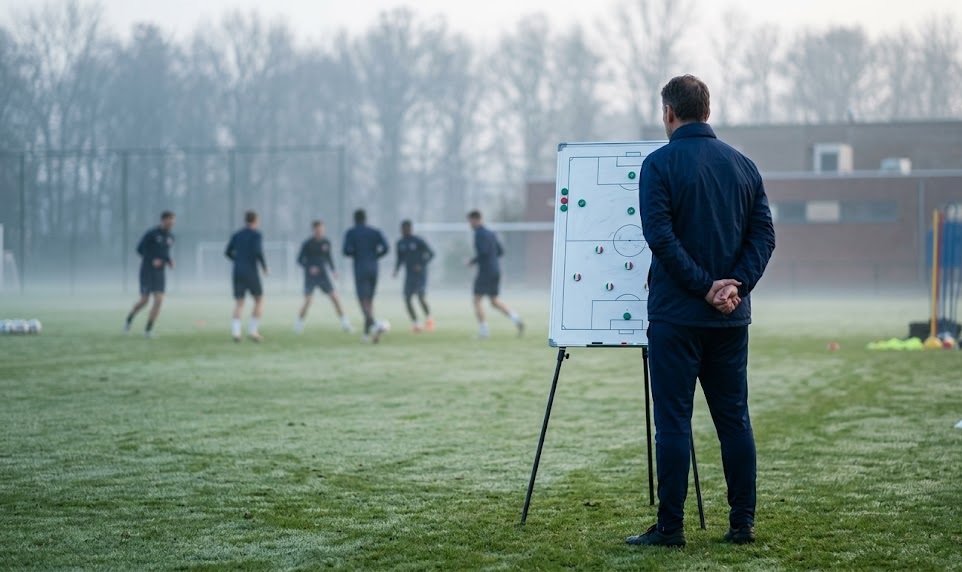
For Italy, the key betting question is not whether the next coach sounds exciting. It is whether the Azzurri can create a version of themselves that works in modern tournament football. That means more than possession numbers or defensive pride. It means balance.
A useful World Cup betting identity has four parts.
First, the team needs a reliable way to create chances. Tournament football is often tight, and teams that depend only on moments can become overpriced if the public loves their name.
Second, the team needs defensive structure that holds against pace. World Cup opponents can punish slow transitions, especially in knockout-style pressure.
Third, the midfield must control tempo or disrupt it. Teams that lose central control often become vulnerable in live betting markets because their odds may remain shorter than their actual grip on the match.
Fourth, the coach must have tactical flexibility. A World Cup team will not get the same game every round. It may need to chase one match, protect a lead in another, and survive pressure against a faster opponent.
This is where Italy’s uncertainty becomes educational. Bettors should not ask, “Is Italy famous enough to bounce back?” They should ask, “What is Italy’s repeatable path to winning matches?”
Why Futures Markets Can Overreact To Coaching Stories
World Cup futures markets are especially sensitive to stories because the tournament is emotional and spaced out over long periods. A team can become a popular bet months before the first match, even if the actual football case remains incomplete.
A coaching rumor can create three common betting traps.
The first is the “savior coach” trap. Bettors assume one appointment can solve years of development, selection, and tactical problems.
The second is the “brand discount” trap. Bettors assume a historic team is good value simply because its odds are longer than they used to be.
The third is the “headline timing” trap. Bettors see a burst of media attention and bet before checking whether the price has already moved.
That is why understanding line movement matters. Bettors who want a stronger foundation can study how odds shifts work through this sportsbook line movement guide, because coaching news is one of the clearest examples of perception and pricing colliding.
The market is not always wrong after a big headline. But it is often emotional before it becomes efficient.
Italy Shows Why Squad Fit Beats Tactical Fantasy
Guardiola-style football sounds beautiful in theory. Control the ball. Compress space. Build patiently. Create overloads. Press immediately after losing possession.
But a national team cannot simply download a club system.
The player pool has to support it. The defenders need passing range and recovery speed. The midfielders need technical security under pressure. The attackers need timing, spacing, and pressing habits. The goalkeeper needs comfort in buildup. The team needs enough training time to make these ideas automatic.
That is the difference between tactical fantasy and betting reality.
For World Cup bettors, this applies beyond Italy. Brazil, England, France, Germany, Argentina, Spain, Portugal, the Netherlands, and the United States all carry different public narratives. Some are priced on talent. Some are priced on recent form. Some are priced on coaching trust. Some are priced on brand power.
The smartest bettors look for the gap between story and structure.
If the story is stronger than the structure, the team may be overpriced. If the structure is better than the story, there may be value.
A Simple Framework For Pricing National-Team Identity
Bettors do not need to become professional scouts to evaluate team identity. They need a repeatable checklist that keeps them from betting only on names.

Before placing a World Cup futures bet, ask:
Can this team create chances against organized defenses?
Does the coach have a clear tactical plan that fits the squad?
Has the team performed consistently in meaningful qualifiers or tournament matches?
Are the odds based on current football or historical reputation?
Is the market reacting to confirmed change or media speculation?
Would this same price still look fair if the team had a less famous badge?
That final question is powerful. If the answer is no, the bet may be driven by brand memory rather than value.
Italy’s situation makes that clear. The Azzurri name will always matter culturally. But bettors cannot price Italy like a guaranteed tournament heavyweight unless the football supports it.
The Betting Lesson Inside Italy’s Reset
Italy’s coaching uncertainty is not just about who sits on the bench. It is about how bettors should think when a famous national team becomes difficult to price.
A coach can matter. A tactical reset can matter. A new voice can change the mood. But World Cup betting value comes from whether those changes create a stronger, clearer, more reliable team identity.
That is the real lesson.
Do not bet the badge. Do not bet the rumor. Do not bet the press conference. Bet the evidence.
If Italy eventually rebuilds into a tactically clear, balanced, confident national team, the market will have to respect it. But until that identity is visible, bettors should treat the Azzurri the same way they should treat every World Cup team: with curiosity, discipline, and a healthy suspicion of easy narratives.
Because in World Cup betting, the question is never just who has the biggest name.
The question is who has the clearest path to playing like a team when the pressure arrives.
Leave a Reply