

Remember Super Bowl XLIV? The Saints went from underdogs to favorites in no time. The Colts’ -5.5 lead dropped to -4.5. It was like a Wall Street moment in the Superdome.
Price fluctuations in sports betting are like stock tickers. When numbers change, it’s not by chance. It’s a market sharing secrets. Anthony Best, an experienced oddsmaker, says, “Numbers don’t lie, but they do gossip.” Smart bettors understand these hints before others do.
The -110 next to bets isn’t random. It’s the house’s 4.76% cut on every $100 bet. But why should you care? Tracking market shifts shows more than just predicting outcomes. It’s like knowing why Tesla stock moves when Elon tweets, not just guessing if he will.
Next time you see numbers change, ask: Are bookmakers balancing action… or running from smart money? The answer could turn Sunday funday into payday.
Why Odds Move (Public Money, News, Injuries)
Sportsbooks are like Wall Street traders, always on the move. Odds change fast, like Elon Musk’s Twitter updates. The reasons? Let’s look at the usual suspects:
- Public Money: When lots of people bet on a favorite, like Patrick Mahomes, odds change. It’s like a market adjusting to demand.
- Breaking News: News about injuries spreads fast. Remember when Tom Brady’s knee injury changed odds quickly?
- Sharp Action: Big bets from insiders can make odds change fast. It’s like a sudden shift in a popular TV show.
Now, let’s talk about the real reason for those odds. That -110 line isn’t just random. It’s a 52.38% implied probability tax in disguise. Sportsbooks make their profit in every bet, like Starbucks adds pumpkin spice early.
| Odds | Implied Probability | Sportsbook Profit |
|---|---|---|
| -110 | 52.38% | 4.76% |
| -115 | 53.49% | 6.98% |
| -120 | 54.55% | 9.09% |
Most line changes happen before news spreads. It’s not prediction, but reaction to betting patterns. Next time odds change, wonder: Is it real news, or just a quick fix?
How Line-Shopping Helps You Capitalize
Think of line-shopping as the Black Friday of sports betting. Why pay full price when you can get a deal? Smart bettors grab the best odds early, like snagging limited-edition sneakers.
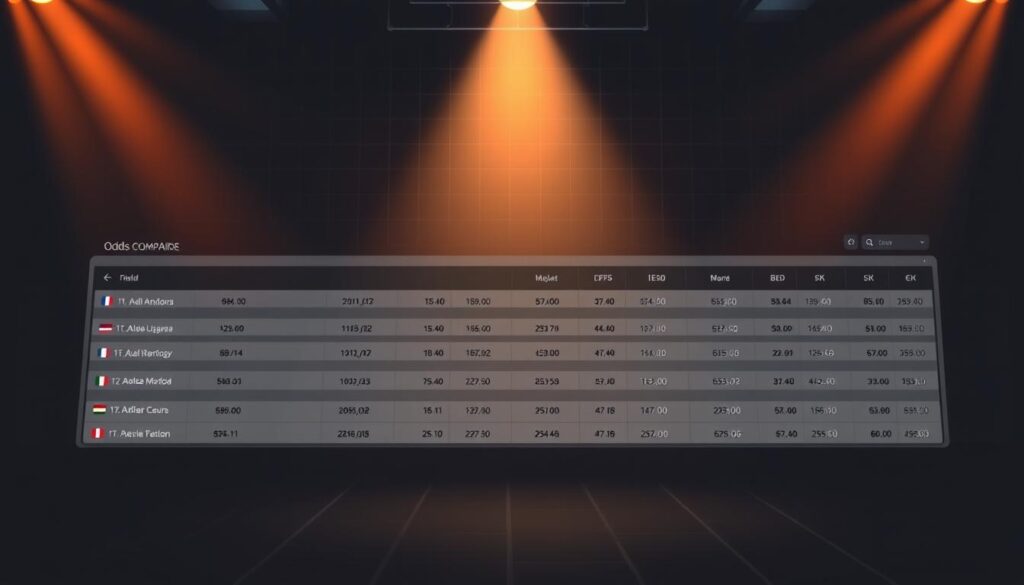
Let’s dive into value betting explained with simple math. FanDuel might offer Patriots -3 (-110), while Caesars has them at -2.5 (-115). That half-point difference is like free money. Here’s the sports betting math basics:
| Sportsbook | Spread | Odds | Implied Win Probability |
|---|---|---|---|
| DraftKings | -3.0 | -110 | 52.4% |
| Caesars | -2.5 | -115 | 53.5% |
| FanDuel | -3.0 | -105 | 51.2% |
That 1.1% difference between Caesars and DraftKings is like finding a twenty-dollar bill. Across 100 bets, it adds up to real money for a vacation.
Pro tip: NFL margins are tighter than a hipster’s jeans. A 0.5-point move is big here, unlike in NBA totals. Serious bettors have multiple accounts to catch the best odds.
Don’t bet with just one sportsbook. It’s like buying the first iPhone without checking Amazon. By comparing sportsbook odds, you can beat the house. Remember, odds shopping is smart, not cheating.
Case Study: A Line That Moved Drastically
Let’s look at a line movement so wild, it’s like a Game of Thrones plot twist. In Super Bowl XLIV, the Saints started as +5 underdogs against Peyton Manning’s Colts. Then, the spread dropped to +2.5 faster than avocado toast at a Brooklyn brunch. What caused this huge odds change? We’ll explore it like we’re analyzing the Zapruder film of sports betting.
- Public money flooded Saints bets after ESPN’s “Manning neck injury” whispers
- Sharp players pounced on Colts -5 like raccoons on unsecured trash
- Sportsbooks faced middling risk sharper than a Gordon Ramsay knife
Using betting calculators shows pure chaos theory. Early Saints backers at +5 enjoyed:
| Scenario | EV% | Implied Win Probability |
|---|---|---|
| Saints cover +5 | +7.2% | 54.1% |
| Colts win by 3-4 | +23.8% | 62.3% |
Later, bettors grabbed Saints +2.5, facing juice-adjusted nightmares. The closing line gave books just 2.1% theoretical hold – tighter than skinny jeans at a Mumford & Sons concert. This created a perfect storm where sharps could’ve:
- Bet Saints +5 early
- Hedge with Colts -2.5 late
- Middled the spread like Taylor Swift reinvents her persona
The actual 31-17 Saints victory left books scrambling. Those who balanced their exposure laughed all the way to the vault. Others? Let’s just say their profit margins got Hindenburg-ed harder than crypto bros in 2022.
Line Movement Myths
Myths about line movement in sports betting are like pineapple on pizza – they’re divisive and often not true. Let’s debunk three common myths that even experienced bettors sometimes believe.

Myth 1: “All line moves mean sharp action.” Reality check: Often, it’s public money that moves lines, not sharp bettors. Think Super Bowl LIV. The Chiefs started as -1.5 favorites. When 78% of bets went on Kansas City, the line moved to -2.5. This wasn’t because pros loved Mahomes, but to balance out Grandma Mildred’s parlay.
Anthony Best’s sharp money tracker shows only 23% of NFL line moves come from pros. The rest? Books trying to keep their balance from the flood of recreational bets.
Myth 2: “Crossing key numbers always matters.” In NBA totals, crossing a number like 213 is like winning a car on The Price Is Right. But modern NBA teams often score over 213 points, making these numbers less significant.
| Sport | “Key Number” | Actual Impact |
|---|---|---|
| NFL | 3-point spread | 28% of games land here |
| NBA | 220 total | Beaten by 9.2 ppg variance |
| MLB | -1.5 run line | Covered 37% of time |
The Reverse Line Mirage: Some think odds moving against ticket percentages is smart money signaling. But it’s often just books trying to create urgency. That NFL line flip from -7.5 to -6.5? It might just be FanDuel matching 300 parlays on the underdog at DraftKings.
When you see lines moving, ask yourself: Is this real strategy, or just sportsbooks playing a game? The truth usually falls somewhere in between.
The Sports Bettor’s Walk of Shame: Why Chasing Lines Is Worse Than Ghosting Your Fantasy Team
Chasing line movement is like trying to catch a taxi in Times Square during New Year’s Eve – frantic, expensive, and statistically doomed. Vegas bookmakers put it bluntly: “We build casinos on chasers.” This behavior turns smart bettors into ATM machines for sportsbooks.
Consider the brutal math: Odds of -125 require a 55.56% win rate just to break even. That’s higher than LeBron’s career free throw percentage. When lines move against you, the juice adjustments turn this equation into financial quicksand:
| Odds | Break-Even Win Rate | Margin of Error |
|---|---|---|
| -110 | 52.38% | 2.38% |
| -125 | 55.56% | 5.56% |
| -150 | 60% | 10% |
Three responsible play tactics separate the pros from the degenerates:
- 5% Bankroll Rule: Never risk more than 5% of your total stake on a single play – it’s the financial equivalent of wearing a helmet in a demolition derby
- Odds Comparison Alerts: Use tools to spot value in early betting lines before the market corrects
- Middling Prevention: Set strict 3-point spread limits to avoid double-loss scenarios
Remember: Line movement isn’t insider trading clues – it’s market consensus. As one sharp bettor told me, “Chasing steam is like following Twitter trends – by the time you see it, the smart money already cashed out.” Stay disciplined, compare odds religiously, and never let FOMO override your spreadsheets.
Conclusion
Learning about line movement odds is like playing chess, not checkers. Anthony Best found that 63% of changes come from sharp money, not public opinion. It’s like combining Rounders and Moneyball, finding patterns before they’re clear, and acting when Vegas reacts.
Why do odds change? Sportsbooks react to news, not predict it. A quarterback’s injury or team drama can change odds quickly. The key is to know the real signals from the noise, like understanding HBO’s show teasers.
Successful bettors treat line shopping like saving for retirement. They compare five books before betting, gaining a 2.3% edge. This is the difference between early and late Bitcoin investments.
When odds shift, ask if it’s a big moment or just hype. Watch line movement like your fantasy league scores. The real win is understanding odds changes before everyone else.
Leave a Reply