

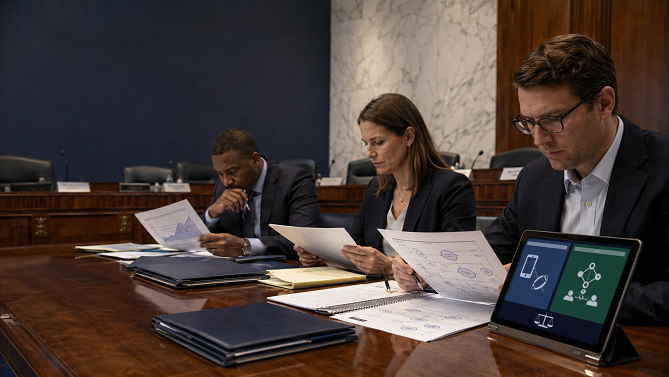
Congress has moved the sports prediction market fight from courtrooms and regulator letters into a public hearing room. On July 21, 2026, the House Agriculture Committee’s Subcommittee on Commodity Markets, Digital Assets, and Rural Development scheduled a hearing in Washington, D.C., titled Examining Customer Protections And Market Integrity In Sports Event Prediction Markets. The witness list included Robert A. Schwartz of Morgan, Lewis & Bockius; David Z. Bean, chairman of the Indian Gaming Association; Christopher Cylke of the American Gaming Association; Carl Kennedy of Katten Muchin Rosenman; and Asaf Meir, founder and CEO of Solidus Labs.
For Championsportsbook.com readers, the hearing matters because sports prediction markets now sit directly beside the sportsbook debate. The question is no longer limited to whether a product looks like a bet. Congress, state regulators, tribes, sportsbook operators, trading platforms, and consumer-protection advocates are now debating whether sports event contracts should be treated as federally regulated derivatives, state-regulated sports betting, or a new product category that needs clearer rules.
Why The House Hearing Puts Sports Event Contracts Under A Brighter Light
The House Agriculture Committee’s hearing title points to two pressure points: customer protections and market integrity. Those are the same subjects that state sportsbook regulators have spent years building into legal sports betting systems through licensing, geolocation, age controls, responsible gambling tools, tax reporting, dispute procedures, and integrity monitoring.

Sports prediction markets operate through a different lane. Platforms such as Kalshi list event contracts through a financial-market structure rather than a traditional sportsbook license. A contract may ask whether a team wins, advances, reaches a certain statistical threshold, or produces a measurable outcome. A sportsbook wager may ask the same kind of sports question through odds, spreads, totals, props, parlays, or futures markets.
The user-facing overlap is obvious. The regulatory structure is not.
That is why the hearing could matter beyond Washington. If Congress accepts the view that sports event contracts are mainly financial products, prediction markets may keep expanding under federal supervision. If lawmakers side with state gaming regulators and tribal gaming interests, sports contracts may face tighter limits, clearer prohibitions, or new federal rules that make them look more like regulated sports betting products.
This debate has already become larger than one company. Kalshi, Polymarket, state gaming boards, the American Gaming Association, tribal gaming organizations, financial-market lawyers, and compliance technology firms are all part of the conversation. That makes the hearing a national sportsbook-regulation story, not a niche derivatives issue.
How The CFTC Proposal Frames The Sports Contract Question
The House hearing comes after the Commodity Futures Trading Commission published a June 10, 2026 Notice of Proposed Rulemaking on event contracts involving enumerated activities. The CFTC event contract proposal said the agency had observed growth in the number and variety of event contracts listed by CFTC-registered entities, including contracts tied to sporting events.
The CFTC proposal would amend Regulation 40.11 and add Appendix F to Part 40. The agency said the framework would help evaluate whether contracts involve activities named in Section 5c(c)(5)(C) of the Commodity Exchange Act, including terrorism, assassination, war, gaming, or conduct unlawful under federal or state law. The proposal also described a 90-day review process and a contract-by-contract public-interest analysis.
For sportsbook regulation, the key word is “gaming.”
If a sports event contract is treated as gaming and contrary to the public interest, it may be restricted. If it is treated as a legitimate event contract with objective settlement, price-discovery value, and adequate market surveillance, it may be allowed. That distinction could decide whether sports prediction markets grow into a durable national product or remain locked in legal fights with states.
Greenberg Traurig’s analysis of the CFTC proposal said the framework is favorable to broad outcome sports contracts based on final scores, point differentials, win-loss results, tournament advancement, aggregate team or player statistics, and season-long performance metrics when settlement uses objective, league-verified data. The same analysis said the proposal looks less favorable toward contracts involving player injuries, officiating decisions, discrete in-game actions, physical altercations, and pre-collegiate sports.
That split shows where the market could go. Basic team-outcome contracts may receive a clearer path. Player injury contracts, officiating-related contracts, and contracts tied to minors or pre-collegiate sports may face stronger opposition.
Why Sportsbooks See A Competitive And Regulatory Gap
Licensed sportsbooks have a straightforward objection: they operate under expensive state gaming rules, yet prediction markets may reach similar sports demand through a federal framework.
A sportsbook that wants to operate in New York, Ohio, Michigan, Pennsylvania, North Carolina, or Arizona must deal with each state’s licensing system, tax rules, geolocation standards, responsible gambling requirements, advertising restrictions, and product approvals. Operators spend heavily on compliance before they can legally take a wager.
Sports prediction markets may not follow the same state-by-state sportsbook map. That creates the competitive tension.
The American Gaming Association and Indian Gaming Association have argued that sports event contracts available outside state and tribal gambling systems can threaten consumer protection, state tax frameworks, and tribal sovereignty. Their joint letter on sports event contract concerns argued that some platforms made sports event contracts available to users 18 and older across all 50 states, creating a direct policy conflict with gaming systems that set different rules by jurisdiction.
That age issue is not a small detail. Legal sportsbook markets commonly require users to be at least 21 in many states. If a federally regulated prediction market allows sports contracts at 18, the product may compete with sportsbooks under a looser age standard. That gap raises questions about consumer protection, responsible gambling controls, and consistent enforcement.
The same logic applies to taxation. State sportsbooks pay tax rates set by state law. Prediction markets may face a different tax and fee structure. If both products attract sports-event demand, lawmakers may ask whether the two systems are competing on equal regulatory terms.
Why Market Integrity Is Becoming The Central Test
Market integrity is the phrase that connects every side of the debate.
Sportsbooks argue that state-regulated betting systems already include integrity safeguards. Leagues, operators, regulators, and monitoring firms watch suspicious betting patterns, account behavior, prop market movement, and settlement issues. State regulators can discipline licensed operators, review disputes, and limit certain markets when risks rise.
Prediction market advocates argue that exchange-style platforms have their own surveillance tools. Solidus Labs CEO Asaf Meir appearing on the House witness list signals that financial-market surveillance and trade-monitoring systems will likely be presented as part of the prediction-market defense. The argument is that sports contracts can be supervised through transaction monitoring, market abuse detection, customer-identification systems, and exchange rules.
The harder question is whether those tools match the risks of sports.
Sports outcomes can be affected by information timing, injury news, roster decisions, officiating, weather, late scratches, player availability, and insider access. That is why player props and discrete in-game actions draw more scrutiny than a simple tournament-advancement contract. One type of market settles on a broad public outcome. Another may be more exposed to private information or manipulation by a small number of people.
The CFTC proposal’s distinction between favorable and unfavorable sports contract factors points in that direction. Broad, objectively settled outcomes may be easier to defend. Injury, officiating, and micro-event contracts create more obvious integrity concerns.
This is where sportsbook comparison must become more careful. A bettor comparing a sportsbook market and an event contract should ask what information can move the price, who may possess that information, how settlement is determined, and what happens if a market is challenged.
What Bettors Should Compare Before Using Sports Prediction Markets
Sports prediction markets are not automatically safer or riskier than sportsbooks. They are different products with different rules. That difference should drive the user’s comparison process.
A sportsbook user often compares odds, bet types, live-market stability, payment options, promotions, withdrawal rules, and state availability. A prediction market user should compare contract definitions, settlement sources, exchange fees, liquidity, order execution, bid-ask spread, account rules, age requirements, location availability, and dispute procedures.
| Comparison Area | Sportsbook Question | Prediction Market Question |
|---|---|---|
| Oversight | Which state regulator licenses the operator? | Is the platform operating through a CFTC-regulated structure? |
| Market Format | What odds, spreads, totals, props, or futures are offered? | What contract terms, prices, fees, and liquidity apply? |
| Settlement | How does the sportsbook grade the wager? | What official data source resolves the contract? |
| User Protection | What limits, self-exclusion tools, and dispute steps exist? | What account controls, surveillance, and complaint process exist? |
| Access | Is the sportsbook licensed in the user’s state? | Is the contract available under current platform and legal rules? |
| Risk | Can odds change before or during the event? | Can prices move sharply before settlement or review? |
That comparison logic is the same reason bettors should verify access rules before trusting offshore forum claims. Championsportsbook.com has covered how offshore sportsbook restrictions can change quickly when state pressure, payment rails, and operator rules shift.
Prediction markets create a similar verification problem. A market may be available one month, challenged the next, and restricted after a court or regulator acts. A user who treats availability as permanent can misunderstand the product before the first trade.
Why State Regulators And Tribal Gaming Groups Are Unlikely To Step Back
The House hearing will not end the state-versus-federal dispute. It may sharpen it.
State gaming regulators are likely to keep arguing that sports event contracts function like sports betting when tied to games, teams, and measurable outcomes. Tribal gaming organizations are likely to keep focusing on sovereignty, compacts, and the risk that federally regulated platforms could bypass state and tribal frameworks that took years to negotiate.
Prediction market operators are likely to keep arguing that event contracts belong under federal commodities oversight when listed on regulated exchanges. They can point to market surveillance, standardized contract terms, clearing procedures, and the information value of prices.
Both arguments have force. That is why the debate may move through Congress, the CFTC, state enforcement actions, federal lawsuits, and appeals before a stable rulebook emerges.
For sportsbooks, uncertainty can affect strategy. Operators may explore prediction-market partnerships, challenge competitors, lobby for stricter rules, or build product lines that respond to exchange-style sports demand. For affiliates and comparison sites, the content challenge is accuracy: sports event contracts cannot be described like normal sportsbook wagers if the rules, oversight, and settlement process differ.
For bettors, the safest answer is slower evaluation. Read the rules. Check availability. Compare protections. Understand that no sports product, whether sportsbook wager or event contract, guarantees an outcome.
Why The Sportsbook Regulation Debate Now Includes Exchanges
The July 21 House Agriculture Committee hearing shows that sports prediction markets have crossed into mainstream sportsbook regulation. The central question is no longer whether people want to trade on sports outcomes. The central question is who should regulate that activity and what protections should apply.
The CFTC’s June proposal may create a more formal path for some sports event contracts, especially broad outcome markets settled through objective data. The House hearing may expose pressure from sportsbook operators, state regulators, tribes, financial-market advocates, and consumer-protection voices. State enforcement actions may keep testing whether federal prediction-market rules can coexist with state sports betting law.
Sportsbook comparison now has to include a new category. Bettors are no longer comparing only licensed mobile apps, retail books, offshore sites, and betting exchanges. They are also comparing event contracts that may look similar to wagers but operate under a different rulebook.
That makes regulation part of the product. If the rules are unclear, the product is unclear. If settlement terms are hard to understand, the market is harder to evaluate. If age, location, tax, and responsible gambling protections differ from state sportsbook standards, users should know that before money is involved, specially when they’re looking to invest in Online Casino.
Congress’ hearing may not produce an immediate answer. It does make one point clear: sports prediction markets are now part of the U.S. sportsbook regulation debate, and every serious betting-market comparison should treat them that way.
Leave a Reply