
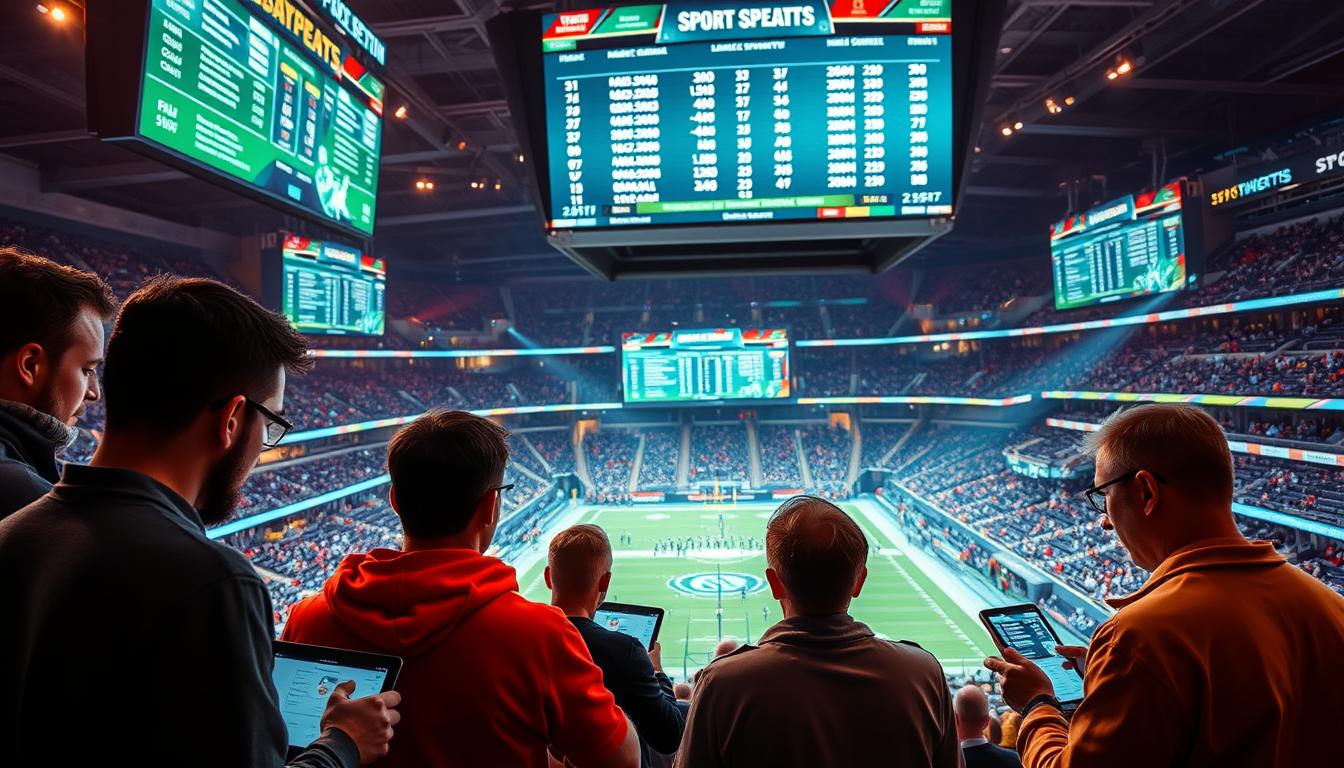
Ever wonder how a big win can feel like a toss-up? That’s where the point spread comes in. It makes big games feel like intense showdowns. Think Super Bowl LIV, where Patrick Mahomes had to beat San Francisco by just 1.5 points to win.
This is spread betting in a nutshell. It turns big underdogs into exciting choices.
Sportsbooks don’t just pick winners. They make odds even for both sides. When FanDuel made Kansas City -3 favorites last February, they weren’t predicting wins. They were balancing bets like stock traders.
This idea started in the 1940s in Chicago. Math teacher Charles K. McNeil turned handicapping into a huge industry.
Knowing about spreads can change how you bet. It turns you from a hopeful gambler into a smart analyst. You’re not just betting on teams. You’re playing a game of strategy with the odds.
How the Spread Works
Imagine Kansas City’s -1.5 spread as a mathematical mic drop. It’s designed to make games fair. Sportsbooks aim for balance, like a friend adjusting Mario Kart.
The Handicap
The spread is like a performance tax. It gives opponents points before the game starts. This makes betting more interesting, like chess.
The Favorite
Favorites aren’t just good; they’re expected to win big. Kansas City’s -1.5 means they must win by 2 points. Betting on favorites is safe but not very exciting.
The Underdog
Underdogs are the heroes of sports betting. Their +1.5 is a strategic cushion. If the Chiefs win by 1, underdog bettors win too. This makes betting fair.
The Vig
The vig is the bookie’s fee. It’s like a service charge. Betting $110 to win $100 is common. The vig helps sportsbooks make money, no matter the outcome.
Covering the Spread
Winning isn’t the same as cashing. Teams must do better than expected. Kansas City’s 31-20 win covered their -1.5 spread by 10.5 points. But a 1-point win is a push.
Sportsbooks focus on margins because they’re not gambling. They’re running a spreadsheet empire. Now you know how to read their lines.
Why the Spread Exists
Think sportsbooks set spreads out of kindness? Please. The spread is like Inception – a dream within a gamble. It makes both sides even, because balanced action means guaranteed profit. It’s capitalism in disguise.
Oddsmakers aren’t just sports fans. They’re risk managers playing a game of three-dimensional chess. Here’s their strategy:
- Market manipulation: That 3-point home team advantage? It’s all about behavioral economics. It’s like putting candy at checkout lines
- Vig insurance: The juice isn’t just extra profit – it’s a force field against bad beats. Bookies sleep well knowing 55% winners lose long-term
- Narrative control: Spreads change like TikTok trends to herd money where books want it. Remember when underdogs got +7 instead of +6.5? That’s not math – it’s mind games
The magic happens when spread betting makes Tom Brady vs. a high school team seem fair. By leveling the field, books create endless betting options. It’s why we bet on anything with a spread – even your cousin’s divorce before the Super Bowl.
Next time you see a puzzling line movement, remember: It’s not about predicting outcomes. It’s about manufacturing consent to wager. The spread exists because without it, sportsbooks would be as balanced as a seesaw with an elephant on one end.
Spread Betting Examples
Let’s make theory into real money – or at least the excitement of trying. Spread betting changes fast, like a TikTok trend. It’s like a sports buffet: NFL spreads are like steak, NBA lines are spicy poppers, and college hoops are the mystery dip.
NFL: Where 3 Points Might as Well Be a Canyon
Imagine Chiefs vs. Bills. The spread is KC -3. You’re not just betting on a win – you’re getting 3-point automatic field goal insurance. That final score of 24-21? You’ve just seen a Vegas photo finish. The vig here is like prime Ray Lewis, usually -110.
This means win $100? Great. Lose? You’re out $110. The house always gets its avocado toast.
NBA: Steph Curry’s Point-Spread Playground
Now, think of Warriors vs. Suns with a -7.5 spread. NBA scoring is like crypto – a 15-0 run can happen fast. That 7.5-point cushion? It’s Vegas saying they can’t predict Curry’s next big moment.
Pro tip: Second-half spreads in the NBA are like Tinder dates – unpredictable but magical.
College Hoops: Where 18-Point Dogs Become Folk Heroes
March Madness spreads defy logic. That 16-seed facing Duke? They’re not getting +18.5 points – they’re getting a narrative. When UMBC beat Virginia in 2018, they didn’t just cover +20.5 – they broke brackets and created a new Appalachian State moment.
College lines are chaos theory: part analytics, part student-section voodoo.
| Sport | Spread Quirk | Vig Reality |
|---|---|---|
| NFL | Whole numbers only | -110 standard |
| NBA | Half-point avoids pushes | Varies by total |
| NCAA | Massive underdog spreads | -115 common |
Now, let’s talk about baseball’s run line. It’s the spread’s weird cousin who shows up uninvited. That -1.5 line? It’s not a spread – it’s a declaration of war. While NFL spreads whisper “maybe,” run lines scream “blowout or bust.”
Perfect for degenerates who think 3-1 games are “high-scoring.”
Risks and Rewards
Let’s play truth or dare: that “-110” vig isn’t just a number—it’s the sportsbook’s version of a hotel resort fee. It quietly eats your profits while you’re distracted by the neon lights of possible wins. Most beginners don’t realize that even a 55% win rate barely keeps you treading water. Want proof? Let’s do the math.
| Bets Placed | Win Rate | Vig Impact | Net Profit |
|---|---|---|---|
| 100 | 55% | -4.55% | $50 |
| 500 | 53% | -9.43% | -$205 |
| 1,000 | 52% | -15.2% | -$520 |
See that negative spiral? Now imagine doubling down with parlays—the scratch-off tickets of sports betting. A 3-team parlay might promise 6-to-1 odds, but the true probability? Closer to 7-to-1 against. It’s like buying concert tickets from a guy named “Slippery Pete” in a parking lot.
Then there’s the half-point trap. Ever seen a spread land exactly on the number? That’s a correlated push—the sportsbook’s way of saying “Thanks for playing!” Smart bettors avoid these scenarios like expired milk. Here’s how to dodge common pitfalls:
- Treat your bankroll like a Netflix password—never share it with impulsive decisions
- Skip parlays unless you enjoy donating to Vegas infrastructure projects
- Watch for key numbers (3, 7, 10) in football—half-point differences matter more than your fantasy league standings
The reward for playing smart? You become the house. Slowly. Painstakingly. But with enough discipline to make a monk jealous. Just remember: in spread betting, the real jackpot is avoiding common sports betting mistakes that turn bankrolls into vapor.
Comparing Spreads Across Sportsbooks
Line shopping is more than just looking for deals. It’s about finding the best value in small differences. For example, why does FanDuel offer Cowboys -3 while Caesars has -3.5? These tiny changes can lead to big wins.
- The Vig Vacuum: A 10-cent difference in juice can add up. Over 100 bets, it’s like finding extra money in your couch.
- Line Lag Exploitation: Circa Sports updates spreads quickly. Keep an eye on their changes to beat slower books.
- Push/Pull Calculus: Different tie policies at PointsBet and BetMGM change the game. A “ties win” policy at PointsBet is different from “ties lose” at BetMGM.
Here’s a look at last Thursday’s NBA games:
| Sportsbook | Lakers Spread | Vigorish | Tie Policy |
|---|---|---|---|
| DraftKings | -7.5 (-110) | 4.76% | Push |
| FanDuel | -7 (-115) | 6.12% | Loss |
| BetMGM | -8 (-105) | 2.38% | Push |
| Circa Sports | -7.5 (-108) | 3.85% | Loss |
See how a half-point difference can change everything? It turns a push into a win or loss. This is where the real value lies.
Pro tip: Set alerts for key numbers like 3, 7, and 10 in NFL games. If Book A changes from -6.5 to -7 and Book B doesn’t, you have a chance to make money. But these chances don’t last long.
How to Analyze Spreads Like a Pro

Cracking the spread code isn’t about luck. It’s about reading between the lines like a Wall Street trader. Let’s break down two sports betting tips for beginners that separate casual fans from sharp bettors.
Strategy #1: Fade the Public
When 80% of bets are on the Packers -7, smart money goes for the Bears +7.5. This is faster than Elon Musk tweets memes. The masses overvalue star quarterbacks and ignore defensive matchups. Track betting percentages on sites like Action Network. If public money hits 70% on one side, it’s a warning sign.
Strategy #2: Follow the Sharp Money
Line movements tell stories. When Duke’s spread against Louisville jumps from -4 to -6 overnight, despite 65% of bets on the Cardinals? That’s Vegas whispering: “Institutions just dumped six figures on the Blue Devils.” Use tools like Don Best Live Odds to spot these surges.
| Factor | Public Bettors | Sharp Bettors |
|---|---|---|
| Line Movement | Chase “steals” | Bet against consensus |
| Betting Patterns | Weekend warriors | Midweek line-shoppers |
| Historical Data | Ignores trends | Analyzes 5+ years |
| Emotional Bias | Homer bets | Pure math focus |
Remember the 2021 Louisville-Duke bloodbath? The spread swung 4 points after sharp action, yet 83% of tickets stayed on the Cardinals. Result? Duke covered by 11. Precision beats passion every time.
Here are three quick sports betting tips for beginners to implement today:
- Track line movements like stock prices
- Bookmark odds comparison sites
- Review 3-year ATS (against the spread) trends
In spread betting, being “kinda right” loses cash. You need surgical accuracy—the difference between celebrating with champagne or crying into your beer.
Bankroll Management for Spread Bettors
Think of your betting account like a football team’s salary cap. Even Tom Brady can’t win championships by spending 80% of his budget on one player. The math is tough, but here are three key rules for sports betting for beginners:
First rule of fight club: Never risk more than 1-3% of your bankroll per play. If you have $500, your max bet is $15. This way, you won’t go broke when Aaron Rodgers gets hurt again.
Let’s simplify the Kelly Criterion. If you’re 55% sure Detroit will cover +3:
- Edge = (0.55 * 1.91) – 1 = 5.05% advantage
- Optimal bet = (Edge / Odds) * Bankroll
- Translation: That $500 becomes $25.25 action, not $500
Sharp bettors and broke degenerates differ here:
| Bankroll | 1% Stake | 3% Stake |
|---|---|---|
| $500 | $5 | $15 |
| $2,000 | $20 | $60 |
| $10,000 | $100 | $300 |
Big players bet small amounts. This helps them survive long losing streaks. Betting your rent money is like scoring from midfield in soccer – it’s rare and usually embarrassing.
Pro tip: Use separate accounts for different sports. Your NBA bets shouldn’t mix with your NFL picks. This isn’t just responsible betting guidance – it’s how Vegas pros stay rich while tourists lose big.
Remember: Bankroll management turns gambling into investing. You’re not chasing dopamine hits – you’re Warren Buffett with a beer and a parlay slip. Now, I need to go bet 0.83% of my net worth on the underdog in the WNBA…
Myths and Mistakes
Sports betting myths spread fast, like rumors at a crypto convention. Let’s clear up these myths with the skill of a comedian who’s also a surgeon.
The biggest myth is that favorites always cover spreads. But, Vegas doesn’t give away free money. That -7 line on the Chiefs? It’s overpriced, like a Gucci belt at a flea market.
Recency bias makes bettors act like goldfish. Remember when the Cowboys won three straight? But, they’re 12-25 ATS in December games from 2018. Betting with emotions can empty your bankroll faster than avocado toast at a brunch.
Parlay Pitfalls & Push Paranoia
Now, let’s look at two common mistakes:
- Parlay Addiction: That 5-team accumulator isn’t a smart bet. It’s more like a lottery ticket with worse odds.
- Push Prevention: Buying half-points to avoid ties? It’s like overpaying for souvenirs in Times Square.
| Myth | Reality | Why It Matters |
|---|---|---|
| “Hot teams” keep winning | ATS trends > win streaks | Teams regress to Vegas expectations |
| Buying points = safety | -110 becomes -150 real quick | Juice erodes long-term value |
| Underdogs = free money | Dogs bark, but often don’t bite | Public underrates situational factors |
Want to learn more? Check out our sports betting myths debunked guide. It shows why 73% of beginners lose because of these mistakes.
Here’s a pro tip: Keep track of ATS records like your ex’s Instagram. That “terrible” team covering 60% of spreads? That’s your new best friend. The “unstoppable” squad failing to beat lines? That’s Vegas’ honey trap.
Remember, betting with your heart is great for rom-coms. But, for bankrolls? It’s the fastest way to become a cautionary tweet.
Responsible Play

Sports betting is like a trendy kale salad – everyone loves it, but few know how to enjoy it safely. In the UK, 1.4 million people are at risk of gambling harm. This is like three Wembley Stadiums full of people who thought they could beat the odds.
Managing your bankroll is key, like keeping an eye on your phone’s battery. You only realize it’s low when it’s too late. Here’s how to avoid running out of funds:
- The 5% Rule: Never bet more than 5% of your bankroll on one event
- Timeouts That Matter: Use cooling-off periods like Netflix’s “Are you watching?” for your betting
- Spreadsheet Therapy: Track your wins and losses like you’re checking Elon Musk’s Twitter
Red flags in sports betting are like bad Tinder dates. They promise too much, move too fast, and disappear with your money. If you need Excel to keep track, it’s time to slow down.
| Smart Play | Reckless Move | Reality Check |
|---|---|---|
| Setting weekly limits | Chasing losses | 88% of chasers dig deeper holes |
| Betting for entertainment | Betting for income | Less than 2% make consistent profits |
| Using official tools | Self-excluding via willpower | Apps beat good intentions 3:1 |
The smart move is to treat deposit limits like condoms – awkward but essential. US sportsbooks offer many safety features, like reality checks and shutdown options. Use them wisely, like you do with your phone’s screen time controls.
For beginners, sports betting should be like playing Guitar Hero, not risking your house for a Fender. The line between fun and addiction is thin. Set limits before you start – your future self will appreciate it.
Final Tips
Sharpen your spread betting edge by treating odds like Black Friday deals. Hunt for value like there’s a 70% off sticker at FanDuel. Watch line movements closely, like Taylor Swift’s chart positions, during Monday Night Football.
Pair spread bets with over under betting strategies. Why stress about Chiefs -7 when Patrick Mahomes’ arm could smash the total faster than Elon Musk rebrands apps? Analyze weather reports and injury sheets like CIA briefings – a muddy field or absent QB changes everything.
For sports betting tips for beginners: Start small, like testing hot sauce drops on tacos. Use Caesars’ odds boosts like cheat codes, but ditch emotional bets fast. Remember – bankroll management separates pros from broke fantasy league commissioners.
Build your ultimate checklist: Compare three sportsbooks minimum (DraftKings never gets lonely), set loss limits tighter than airport carry-ons, and quit Sunday night games like they’re Zoom meetings that could’ve been emails. True spread mastery? It’s not about beating the bookie today – it’s about outsmarting them through 17 NFL weeks while keeping grocery money.
Leave a Reply