
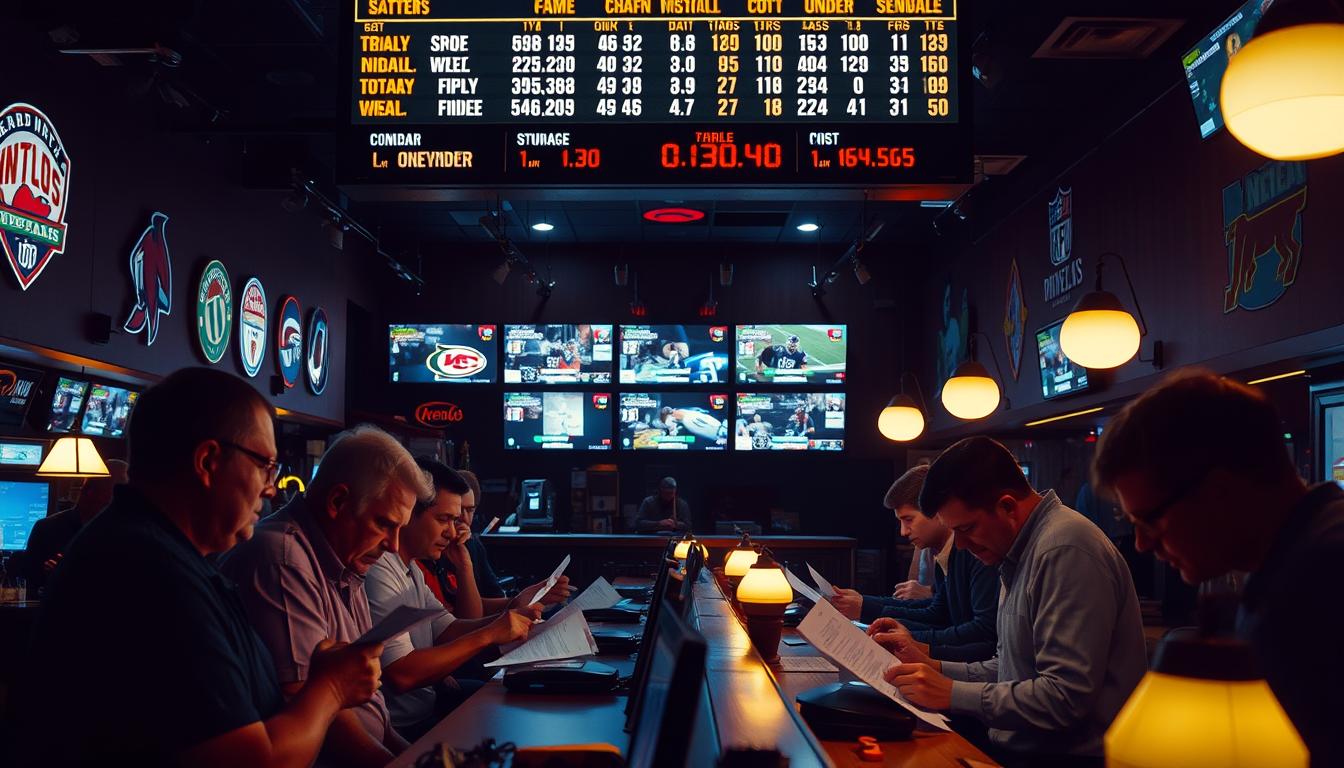
Welcome to sports betting’s answer to Goldilocks. We’re not picking winners or losers. Instead, we guess if the final score will be too hot, too cold, or just right. It’s about numbers, not loyalty or miracles.
Think of it as fantasy football for spreadsheet nerds. Every touchdown or three-pointer is a data point. It’s your personal analytics dashboard.
Sportsbooks call this totals betting. It’s betting on the combined score of both teams. As Marco Petrella says, “It’s blackjack for sports fans—you’re just playing against the house’s number, not each other.”
Why do totals markets feel more intuitive? Simple: you don’t need to predict who wins. Just how much scoring happens.
Let’s break it down. That NFL game with a 48.5-point line? You’re betting on whether Mahomes and Allen will make Arrowhead Stadium a fireworks show or a chess match. The NBA playoff total set at 225? That’s Vegas asking if you trust modern basketball’s score-first philosophy or expect old-school defensive grit.
New to this? Don’t sweat it. Totals betting strips away team biases. It lets you focus on pure math. No need to understand point spreads or worry about that mysterious “vig”.
It’s sports betting explained through probability, not passion.
What Does Over/Under Mean?
Imagine you’re at a sportsbook, wondering if Super Bowl LIV’s score will be over or under 53 points. It’s not just betting – it’s totals betting. You’re guessing if reality will go over or under what the sportsbook predicted.
The Chiefs vs. 49ers game is a great example. The 53 points weren’t chosen randomly. They were calculated with all the factors in mind. This includes Patrick Mahomes’ strength and San Francisco’s defense.
Even the halftime show’s impact was considered. The goal was to make the odds even, with the sportsbook making money from the juice (those -110 odds).
Over under odds reflect what people think about a game. They make you question if everyone is too optimistic. They turn fans into amateur statisticians, caring about details like defensive third-down percentages.
It’s like swiping on Tinder, but for sports betting. You’re not choosing a team. You’re guessing if the teams’ combined effort will be exciting or not. And just like dating apps, the house usually wins… unless you figure out their secret.
This isn’t just for football. Betting on if Tom Hanks will make you cry in 90 minutes is the same idea. Sportsbooks set emotional thresholds as numbers. Then, they charge you to guess if life will be more dramatic than their predictions.
Calculating Totals
Figuring out totals isn’t just a guess. It’s like solving a complex math problem. Oddsmakers don’t guess; they analyze games with great detail. They turn chaos into clear numbers.
The Math Behind the Magic
An NBA game in 2017 had a total of 215 points. Now, that number seems outdated. Why? It’s because of three main factors:
- Pace – How many possessions teams have in 48 minutes
- Efficiency – What they do with those possessions
- Rule changes – The NBA’s 2021 rule tweak added 4.2 PPG leaguewide
Let’s look at real numbers. The Warriors’ 2023 playoff run had 12% more transition plays than their 2017 team. This led to higher totals. Here’s how scoring changed:
| Season | Avg. NBA Total | Top Offense PPG |
|---|---|---|
| 2016-17 | 215.5 | 113.7 (Warriors) |
| 2022-23 | 229.1 | 121.8 (Kings) |
In the NFL, totals are calculated carefully. That 38.5 total in Bears-Packers? It’s based on wind and weather. Soldier Field’s November winds (avg. 18 mph) cut passing yards by 23% compared to dome games. Justin Fields’ rushing yards become key factors.
Sportsbooks track these variables closely. If totals seem off, it’s time to investigate. Remember, oddsmakers dislike surprises. The numbers always tell a story, if you know how to read them.
Why Totals Bets Are Popular
Totals betting is popular because it offers excitement. We love watching games with big scores and dramatic finishes. But what makes this market so appealing? It’s not just about the numbers—it’s about the thrill of the game.

Psychology of the Over
Betting on the over is like buying lottery tickets. We’re not just guessing scores; we’re hoping for a big win. We think this game will be different, even though it never is. Remember when you thought the 2023 Knicks would score 120 points? Yeah, that didn’t happen.
Here’s the thing: losing on under bets hurts more. Missing an over by a little feels like a big loss. But barely winning on the under feels like a small win. Sportsbooks take advantage of this by making the over more appealing.
| Factor | Over Bet | Under Bet |
|---|---|---|
| Emotional Payoff | High (Thrill of scoring) | Low (Defensive satisfaction) |
| Public Perception | 62% prefer overs* | 38% prefer unders* |
| Common Mistake | Ignoring weather/rotations | Overvaluing “bad” offenses |
*2023 FanDuel betting trend data
Three traps can ruin totals betting:
- The Highlight Reel Effect: We remember Lamar Jackson’s 4-TD game, not his 17-13 snoozefest.
- Anchoring Bias: If last week’s Heat-Celtics game hit 230, surely they’ll do it again?
- FOMO: Watching others cash over tickets while you’re stuck with a 2-1 soccer under? Brutal.
To avoid these traps, treat totals betting like a Black Friday sale. Everything is designed to make you spend more. Next time you see a 56.5 NFL total, ask yourself: Is this really a good deal, or is it just tempting?
Real Sports Examples
Ever wondered how Mahomes’ endzone shuffle could make grown adults cry into their spreadsheets? Let’s look at three iconic moments where NFL over/under bets turned into drama. These aren’t just stories – they show how totals betting turns fun into serious math.
Super Bowl LIV: Chiefs vs. 49ers
Sportsbooks set the line at 53.5 points for the 2020 championship. Then, chaos happened:
- First three quarters: 27 combined points (under territory)
- Fourth quarter explosion: 24 points in 7 minutes
- Final score: 31-20 Chiefs (51 total points)
Betting shops saw 68% of money on the over. The lesson? Even Andy Reid’s playbook can’t outsmart the exact midpoint between probable and improbable.
Lakers vs. Clippers: Battle of LA Mathletes
When these NBA titans clash, scoreboards get anxious. A 2023 showdown saw:
| Stat | Pre-Game Projection | Reality |
|---|---|---|
| Total Points | 225.5 | 201 |
| Three-Pointers | 27.5 | 19 |
| Free Throws | 45.5 | 38 |
The under hit harder than a LeBron chase-down block. Defense wins championships – and crushes NBA totals bets.
Nationals vs. Dodgers: Pitching Armageddon
This MLB rivalry turns 7.5 runs into Mount Everest. A 2022 duel featured:
- Scherzer’s 14 strikeouts
- Kershaw’s 8-inning shutout
- Final score: 1-0 Dodgers
Sportsbooks reported 83% of bets on the over. The lesson? When Cy Young candidates collide, bring a microscope – runs become subatomic particles.
Over/Under vs. Spread/Moneyline
Choosing between totals, spread, and moneyline bets is like picking a drink. Each has its own vibe. Let’s dive into these types of sports bets with the excitement of March Madness.
Risk Comparison: High Stakes or Smooth Sailing?
Spread betting makes every game intense. You bet on how well your team wins. Think of the Chiefs needing to beat the 49ers by 1.5 points in Super Bowl LIV. That’s the thrill of spread betting.
Moneyline bets are simpler. You just bet on your team winning. But, betting on favorites can be as exciting as watching paint dry.
Totals betting is perfect for those who love excitement without high stakes. You bet on whether the game will be high-scoring or low-scoring.
- Turn the game into a fireworks show (over)
- Play defense like it’s 1926 (under)
Teaser bets offer better odds by adjusting spreads and totals. But totals bets are straightforward. You just predict if offenses will click or fail.
| Bet Type | Risk Level | Skill Required | Emotional Toll |
|---|---|---|---|
| Spread | High | Team analysis | Ulcer-inducing |
| Moneyline | Low-Medium | Basic math | Mild anxiety |
| Over/Under | Medium | Game flow prediction | Controlled chaos |
Totals betting lets you enjoy both Patrick Mahomes’ interceptions and Christian McCaffrey’s fumbles. It’s like watching a car crash documentary while eating popcorn. You’re detached from team loyalties.
How Sportsbooks Set Totals
Setting over/under odds isn’t magic – it’s complex math and psychology. Sportsbooks use algorithms to balance bets, creating a split among bettors. The real trick is in the numbers, where profit meets probability.
Vigorish Calculations
The -110 juice you see? It’s like a toll on every bet. Here’s the math:
- The vig vacuum: Sportsbooks keep $5 (4.76%) from every $110 bet, win or lose
- Balancing act: They adjust lines to balance money on both sides
- Edge compounding: A 52.4% win rate just breaks even, giving the house an edge
Line changes are like Wall Street, but with more casual clothes. When big bets come in, oddsmakers quickly adjust totals. Triggers include:
- Last-minute injury reports (quarterbacks are key)
- Weather forecasts (rain makes football slow)
- Public betting trends (even your Uncle Bob’s bets matter)
The goal? Make a system that profits whether you bet high or low. It’s like financial judo, using bettors’ momentum against them. You’re not just betting on teams; you’re fighting against the odds, all while wearing a DraftKings hoodie.
Key Strategies for Totals Betting
Mastering totals bets is more than guessing. It’s about playing chess while everyone else is playing checkers. We’ll look at two key strategies that make bettors sharp.
Weather Watching 101
Not checking the weather is like baking cookies in a broken oven. It’s a bad idea. While NBA totals aren’t directly weather-dependent, knowing the weather is important:
- Wind is the silent point killer: 15+ mph gusts reduce NFL passing efficiency by 18% (ask any quarterback who’s thrown into a Lake Erie snow globe)
- Humidity = defensive fatigue: MLB games in 90%+ humidity see 22% more late-inning runs as pitchers’ grips deteriorate
- Indoor compensation: When weather wrecks outdoor games, sportsbooks adjust NBA totals upward as casual money floods toward “exciting” overs
Bankroll Management
Protect your betting fund like Scrooge McDuck’s vault. Here’s how to avoid chasing losses:
- The 5% rule: Never risk more than 5% of your total bankroll on a single play
- Unit sizing: Assign 1 unit = 1% of your fund. Even Warren Buffet doesn’t YOLO
- Loss brakes: If you drop 20% in a day, walk away. The games will exist tomorrow
Remember: Sportsbooks have infinite money. You don’t. Discipline isn’t sexy, but neither is eating ramen because you bet the Lakers-Kings over without checking LeBron’s injury report.
Myths & Pitfalls
Betting on totals is like ordering a mystery cocktail. Sometimes it’s great, sometimes it’s a disaster. The real danger isn’t the odds. It’s the stories we tell ourselves to make bad bets sound good.
The “Overs Are More Exciting” Fallacy
Thinking NFL over/under bets on high-scoring games are always exciting is a myth. It’s like expecting great dialogue from a monster truck rally. Sportsbooks love this myth—it’s why 68% of public money goes to overs, according to Vegas bookmakers.
But here’s the twist: defensive games can be more exciting than high-scoring ones.
- Myth: “Overs mean constant action!”
- Reality: A 13-10 NFL game with 4 fourth-down stops and a goal-line stand creates more tension than a 45-42 shootout decided by garbage-time touchdowns
- Data Don’t Lie: Last season’s top 5 most bet “over” games went 1-4 against the total
This trap comes from what behavioral economists call ”narrative bias”. Our brains like simple stories (“more points = more fun”) over complex realities. Remember Super Bowl LIII? Patriots vs. Rams broke records for lowest scoring Super, yet it was full of strategic intrigue.
Three rules to avoid becoming a totals tourist:
- Bet markets, not movie scripts (bookmakers set over under odds based on math, not Marvel plots)
- Watch weather reports like they’re spoiler alerts (30mph winds? That over’s deader than disco)
- Treat defensive stats like Yelp reviews—if three teams praised a defense’s red zone efficiency, believe them
The smart play? Approach totals like a film critic, not a popcorn-munching fan. Sometimes the arthouse thriller (under) outshines the CGI explosion fest (over).
Being Responsible with Totals Bets
Let’s get real about totals betting. It’s not something you can just stop when you feel like it. It takes discipline and self-awareness. David Forman from GAMING LABS International says, “The house always eats first – your job is to make sure it doesn’t feast on your rent money.”

Building Better Betting Handcuffs
Your bankroll is a promise to your future self. Loss limits are like antivirus software for your money. Here’s how to protect it:
| Strategy | How It Works | Benefit |
|---|---|---|
| 5% Bankroll Rule | Never risk more than 5% per bet | Survives 20-loss streaks |
| Daily Circuit Breaker | Stop after 3 consecutive losses | Prevents tilt-driven disasters |
| Monthly Profit Cap | Withdraw 50% of profits monthly | Forces real-world value recognition |
These aren’t just suggestions. They’re like your phone’s screen time limits. The National Council on Problem Gambling says setting limits can cut compulsive behavior by 63%. Your future self will be grateful for not having to explain missing payments.
Here are three reality checks for when you feel the rush:
- Would you bet this money on a coin flip with your boss watching?
- Does this wager feel like investing or like buying lottery tickets?
- Could you explain your strategy to a 10-year-old without feeling silly?
Remember, the smartest totals bettors don’t just win. They lose small. For extra help, call 1-800-GAMBLER. Now, bet like you want to retire someday.
FAQs
Got questions about over under odds? Let’s tackle them like Patrick Mahomes facing a fourth-quarter deficit – with precision and a dash of flair. These answers cut through the noise faster than a Vegas sportsbook during March Madness.
What’s a Push?
Imagine betting the over in a Chiefs game where the total lands exactly on the sportsbook’s number. That’s a push – the betting equivalent of your ex texting “we need to talk” and then ghosting. Your stake gets refunded, no harm done. It’s why sharp bettors monitor line movements like Wall Street traders tracking meme stocks.
Does Overtime Count?
Absolutely. NBA overtime periods famously swing totals bets – ask anyone who’s watched a Lakers-Nuggets thriller. NFL overtime rules? They count too, though baseball’s extra innings create unique scenarios. Pro tip: When analyzing over under odds for playoff games, factor in possible bonus football or free baseball.
Want more? Bookmark this page like it’s your lucky parlay slip. Whether you’re debating weather impacts or calculating vig, remember – the smart money never stops learning. Now go forth and may your totals bets be as crisp as a Brady two-minute drill.
Leave a Reply