
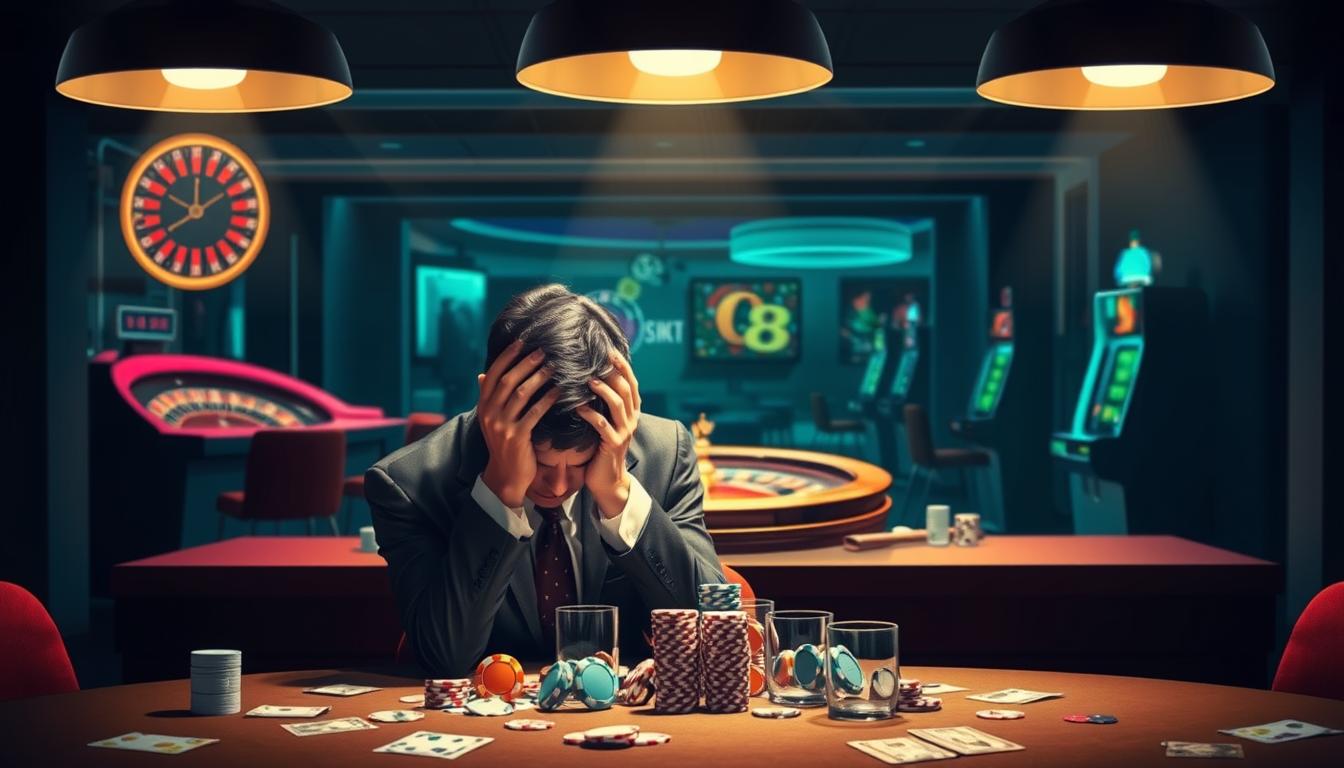
Ever seen someone bet their rent money like Icarus flying toward the sun? That’s problem gambling in its purest form. It’s not just losing cash, but risking everything valuable in your life.
Clinically, it’s a pattern of betting that keeps going despite negative effects. The American Psychiatric Association calls it a gambling disorder. It harms work, relationships, and mental health.
I’ve seen friends go from casual bets to becoming human odds calculators. The change is so gradual, you don’t notice until you’re in deep. It’s like realizing you’ve binge-watched an entire series when you only meant to watch one episode.
Spotting gambling addiction warning signs early is key. It’s not about the money lost. It’s about everything else at stake.
Behavioral & Emotional Red Flags
Have you ever seen someone’s gambling turn into a job they hate? It doesn’t happen fast. It’s like watching someone get lost in their phone at family dinner, starting small and then getting obvious.
Signs of problem gambling can look like normal life changes. That friend who suddenly doesn’t like golf anymore? The cousin who misses every birthday? They might be showing signs of gambling addiction. Other warning signs include:
- Radical changes in sleep or eating patterns
- Ignoring work and family responsibilities
- Constant money conflicts and secret loans
- Increased alcohol or drug use
- Always talking about “the big score”
The emotional side is just as telling. It’s like watching someone on an emotional rollercoaster without a safety bar. They might feel great about winning, then crash after losing.
Common emotional warning signs include:
- Withdrawing from relationships and social events
- Unexplained anxiety and restlessness
- Mood swings that make teenage hormones look stable
- Anger outbursts over minor inconveniences
- Using gambling to escape real-world problems
To be diagnosed with problem gambling, someone needs to show at least four of nine specific signs. These include being obsessed with gambling, needing to bet more for excitement, and feeling restless when trying to cut back. The most telling sign? Chasing losses – trying to win back money that’s already gone.
The financial damage is big, but the psychological impact is even bigger. It’s not just about the money lost. It’s about the relationships hurt, opportunities missed, and lies told to keep up the habit.
Spotting these signs early is key. If you see someone showing many gambling addiction warning signs, it’s time to talk. The addiction isn’t trying to be mean. It’s just trying to protect itself, like a broken immune system.
That family member who gets defensive about their “entertainment budget”? The friend who can’t watch a movie without checking betting apps? These aren’t just quirks. They’re signs of gambling addiction. Ignoring them could mean missing a chance to help before it gets worse.
When Fun Becomes Risk
Do you remember that first rollercoaster ride? It was thrilling at first, but then it turned scary. That’s what happens when fun turns into problem gambling.
Going from casual betting to compulsive gambling is a slow process. It begins with a small bet that pays off, or a winning streak at poker. This initial win makes you feel great, but it also sets a dangerous path.

Today, gambling is always available, like having a 24/7 open bar in your pocket. It’s like giving an alcoholic a never-ending supply of drinks and calling it convenient.
Several factors can lead to this dangerous change:
- Early big wins that create unrealistic expectations
- Mistaken beliefs about odds and probability
- Failure to track wins and losses accurately
- Using gambling to cope with recent life stresses
- Mental health issues like depression or anxiety
The more risk factors you have, the faster things can get out of hand. It’s like the difference between having a drink with dinner and keeping a bottle at your desk. Both involve alcohol, but only one suggests a problem gambling issue.
What makes this so bad is how gambling problems are like other addictions. They start as ways to escape problems, but soon become the main issue. The activity that was meant to help ends up causing more harm.
We’re seeing a mix of modern problems come together in gambling. Instant gratification, financial stress, and feeling alone all meet in the bright lights of casinos. Problem gambling might be a warning sign for bigger issues we’re ignoring while we bet.
Seeking Help
Have you ever spent hours looking for the perfect mattress but didn’t call for help when things got tough? It’s like ignoring a fire because you’re busy rearranging chairs. Only 1 in 10 people with gambling disorders seek treatment.
Today’s help isn’t like old stereotypes. It mixes expert advice with real-life stories. It’s about fixing things, not judging.

- Cognitive behavioral therapy – changing those automatic “just one more bet” thoughts
- Group sessions – finding support from those who’ve been there
- Financial detox programs – fixing money problems without shame
- Medication management – for anxiety or depression too
Peer support specialists offer real understanding. They show that recovery is not just possible but practical.
| Intervention Type | Best For | Time Commitment | Success Indicators |
|---|---|---|---|
| Cognitive Behavioral Therapy | Pattern recognition | 12-16 weeks | Reduced urge frequency |
| Group Therapy | Community building | Ongoing | Social accountability |
| Financial Counseling | Debt management | 6-8 sessions | Budget adherence |
| Medication Management | Co-occurring conditions | Varies | Symptom reduction |
Helplines are more than just emergency numbers. They offer access to a wide range of help. The Virginia Problem Gambling Helpline (888-532-3500) and National Helpline (1-800-662-HELP) can connect you to many resources. They help with everything from blocking gambling sites to finding specialists who know the signs of gambling addiction.
The goal is more than just stopping gambling. It’s about building a life so good that gambling becomes background noise. Recovery is about gaining, not losing.
Talking to Loved Ones
Imagine trying to defuse a bomb while wearing oven mitts. That’s how hard it is to talk about problem gambling. I’ve seen more family talks fail than celebrity marriages at awards shows.
The key is to turn confrontation into connection. It’s not like an episode of Intervention. It’s more like a delicate dance where trust and sanity are the goals.
The Do’s: Building Bridges Instead of Walls
First, acknowledge their humanity. Everyone has good qualities beyond their gambling behaviors. Focus on those strengths.
Stay calm and concerned, not condemning. Explain how their actions affect the family, like children.
Setting financial limits is not punishment. It’s a way to protect everyone. Look at statements together and find local help like Gam-Anon.
The Don’ts: How to Avoid Nuclear Meltdowns
Don’t lecture like a disappointed teacher. Anger is as useful as yelling at a slot machine.
Don’t cut them off from family. Isolation makes things worse. Recovery takes time, not a sprint.
Most importantly, don’t fund their addiction. Helping them gamble is like giving an arsonist more fuel.
| Strategic Approach | Why It Works | Common Pitfall |
|---|---|---|
| Calm conversation timing | Creates receptive environment | Confronting during emotional highs/lows |
| Specific impact examples | Makes consequences tangible | Vague accusations |
| Financial boundary setting | Removes enabling mechanisms | Empty threats without action |
| Professional resource sharing | Shows structured support options | Demanding immediate solutions |
Problem gambling affects everyone, from CEOs to college students. Talk about protecting them, not punishing them.
The goal is not to win an argument. It’s to help them see a way out, even if it takes time. Sometimes, just leaving the light on is the best help.
Self-Assessment Checklist
Ever find yourself thinking about a slot jackpot win during a meeting? That’s a sign of a problem. This checklist is not to shame you but to help you see clearly. How often do you think about gambling?
Ask yourself: do you keep betting more to feel the thrill? Have you tried to stop but can’t without it? Do you gamble to avoid problems or to try and win back losses? Be honest with yourself.
Think about the effects. Is your “fun money” now causing financial trouble? Has your work performance dropped? Are your relationships suffering because you’re hiding things? If someone you care about showed these signs, what would you do?
This is a chance to face the truth. Recognizing these signs early can protect your money and health. Don’t ignore the signs your life is showing you.
Leave a Reply