

Trying to understand betting math can be tough. It’s like explaining TikTok to someone who uses “Ye Olde English” in texts. After the Supreme Court’s 2018 decision, Americans had to learn about -110 and 5/2 odds fast.
This guide is like a decoder ring. We’ll break down three important number systems. Why does Vegas care about how you show odds? And why does -110 seem so scary at sportsbooks?
Learning these formats isn’t about beating algorithms. It’s about finding value, like a vinyl collector at a sale. With 40 states now allowing sports betting, the game has changed a lot. We’ll give you the tools to spot value without the bloodshed.
Pro tip: Knowing these systems is smart and responsible. No one wants to confuse American odds with the Declaration of Independence.
What Are Betting Odds?
Do you think betting odds are just numbers? They’re like a casino’s emotional weather report – always changing. Odds are the DNA of betting, showing everything from chances to the sportsbook’s profit. Let’s explain it in simple terms.
Imagine you’re at McDonald’s looking at a Big Mac for -110. That negative sign means you risk $110 to win $100. It’s how sportsbooks make money – like extra charges for fancy burgers.
Here’s how the math works:
- Probability Translator: Odds turn percentages into dollar amounts (2.50 odds = 40% chance)
- Risk Calculator: Shows how much you risk
- Bookie Insurance: That -110 is the famous juice or vig
Why do sportsbooks love -110? It’s their secret to making money – “Talk less, profit more.” They keep $10 for every $110 wagered, win or lose. It’s like a bar tab with a 9.1% tip.
But the truth is, odds aren’t magic. They change based on where money flows. That’s why understanding sports betting math basics is key, not chasing sure wins.
Remember: Odds aren’t fortune cookies. They’re equations to keep the house ahead, even when you win. Knowing how sports betting works helps you see it’s about margins, not magic.
The Three Main Formats: What They Look Like
Odds formats are like streaming platforms – everyone claims theirs makes the most sense, but you need subtitles to understand each one. Let’s cut through the noise with a decoder ring for the three systems ruling sportsbooks worldwide.
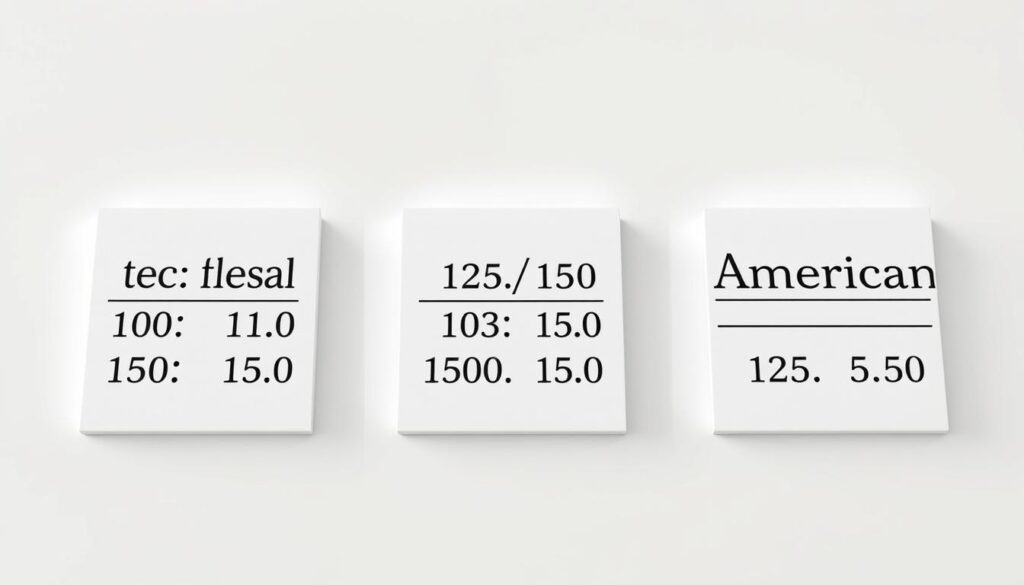
Decimal: The Metric System of Gambling
Decimal odds explained in Tom Brady terms: 1.25 odds mean you’d need to risk four Lombardi trophies to win one. Cleaner than a Swiss watch, these numbers show your total payout (stake + profit) at a glance. A $100 bet at 4.00? That’s $400 landing in your DraftKings account – easier than assembling IKEA furniture while hungover.
Fractional: Downton Abbey Meets Wall Street
Royal Ascot’s 15/8 odds work like Taylor Swift’s Eras Tour math – for every $8 you risk on the “Reputation” album era, you’d pocket $15 in pure profit. These fractional odds explained through pop culture: 7/1 means seven parts champagne to one part regret. Brexit couldn’t convert Britain to decimals – some traditions die harder than a Bond villain.
American: Our Healthcare System’s Bettor Cousin
+350 odds on Aaron Rodgers’ Jets tenure? That’s the sports equivalent of investing in crypto. -200 on Patrick Mahomes? You’re buying blue-chip stock. This American odds breakdown reveals our national quirk: positive numbers show profit per $100 bet, negatives reveal needed wagers to win $100. Chiefs at -760 means risking $760 to win $100 – the Vegas version of a subprime mortgage.
| Format | Example | Payout Calculation | Best For |
|---|---|---|---|
| Decimal | 2.50 | $100 x 2.50 = $250 total | Global soccer parlays |
| Fractional | 5/2 | $100 x (5/2) = $250 profit | Horse racing & UK markets |
| American | -110 | Risk $110 to win $100 | NFL spreads & US sportsbooks |
Notice how -110 odds dominate NFL spreads? That’s the bookie’s vigorish – the price we pay for the thrill of watching our retirement fund ride on a field goal. These line movement odds shift faster than political polls during election season.
How to Quickly Convert Between Odds Types
Converting betting odds is like swapping units in a recipe. Mess it up, and your dish fails. But with the right cheat codes, you can switch formats fast. Let’s make it simple.
The Dodgers’ World Series odds are 2.40 (decimal). To convert to fractional, subtract 1 and simplify. This becomes 7/5, easy to understand. For American odds, subtract 1 from the decimal and multiply by 100. So, 2.40 – 1 = +140.
To reverse-engineer -140 American odds, divide 100 by 140, add 1, and you get 1.71 in decimal. It’s like translating Shakespeare into emojis. It looks hard at first but makes sense once you know the rules.
| Decimal | Fractional | American | Use Case |
|---|---|---|---|
| 2.40 | 7/5 | +140 | World Series Futures |
| 1.71 | 8/11 | -140 | Premier League Relegation |
| 3.00 | 2/1 | +200 | NBA Championship |
Why does this matter? Imagine seeing Arsenal at 8/11 for relegation. Your friend sees 1.71 decimal. With conversion skills, you know it’s the same bet.
For complex conversions, bookmark our betting calculator. But mastering these basics? That’s your ticket to comparing lines like a pro.
Pro tip: Negative American odds always convert to decimals below 2.0. If you see -150, think “risk $150 to win $100” or 1.67 in decimal. It’s like spotting a 20% discount versus “buy four, get one free” – same deal, different packaging.
Examples from NFL, NBA, Soccer, and More
Let’s look at real odds that will impress Wall Street. The Celtics-Lakers moneyline last season had Boston at +180 and L.A. at -360. Betting on the Lakers was like buying Apple stock in 2003 – pricey but someone’s always willing to pay.
Morocco’s +2500 World Cup run was like Tesla in 2010. It was a dream for value hunters because:
- Implied probability: 3.8% (decimal odds 26.00)
- Actual pre-tournament chance (per analytics): 6.2%
- Discrepancy = pure value betting gold
Political markets also have their share of drama. When Trump was 4.00 against Biden’s 1.30 before a debate, it was more than politics. It was a lesson in odds movement. The implied 25% vs 77% probabilities showed more volatility than Elon’s Twitter.
| Event | American | Decimal | Fractional |
|---|---|---|---|
| Chiefs Super Bowl Win | +600 | 7.00 | 6/1 |
| Man City UCL Title | -150 | 1.67 | 2/3 |
| ESPN’s TNF Over/Under | -110 | 1.91 | 10/11 |
The Champions League parlay was a disaster. It combined PSG’s 1.50 moneyline with Barcelona’s 2.75 handicap. It crashed harder than Zuckerberg’s metaverse avatars. Remember, always convert fractional odds to decimal before stacking bets. Those small differences matter.
The real value often hides in format conversions. The -360 Lakers line becomes 1.28 decimal. Suddenly, the 78% implied probability feels less certain against Boston’s 35.7% (+180). Value betting is not just math; it’s seeing the Matrix through the numbers.
What Format Should I Use?
Choosing your odds format is like playing chess, where location and math meet. It’s like picking a streaming service: Brits prefer fractions, while Americans like moneyline odds. Your choice affects finding the best value odds more than your fantasy football picks.
Let’s compare sportsbook margins like comparing avocado prices. FanDuel’s -115 juice on NFL spreads is like the $18 guac. BetMGM’s -112 is the bulk tub, showing “I adult responsibly.” Decimal odds are clear, showing the true cost difference without hassle.
Here are three rules for format fidelity:
- Use decimal for parlay calculations (they multiply easier than TikTok trends)
- Stick to local dialects – don’t order tea with your baseball bets
- Always convert formats to compare sportsbook juice like a CPA auditing receipts
Pro move? Bookmark an odds converter next to your fantasy apps. Knowing the -110 vs. 10/11 difference can fund your next Netflix subscription – or at least cover the guac tax.
Practice: Converting Odds
Time to flex those mental muscles – we’re converting odds with the urgency of a blackjack dealer during March Madness. Let’s start with Shohei Ohtani’s MVP odds (+400 American). Here’s your crash course:
- American to Decimal: Add 1 to (odds/100). +400 becomes 5.00 (1 + 400/100)
- Fractional to Profit: $10 at 7/4? Multiply stake by numerator/denominator → $10 × (7/4) = $17.50
- Implied Probability: +200 = 100/(200 + 100) = 33.3% chance
| Format | Bills Moneyline | Chiefs Spread | Parlay Payout |
|---|---|---|---|
| American | +150 | -110 | +735 |
| Decimal | 2.50 | 1.91 | 8.35 |
| Fractional | 3/2 | 10/11 | 6.35/1 |
A $50 parlay on Bills (+150) and Chiefs (-110). Decimal odds multiply → 2.50 × 1.91 = 4.775. Total return: $50 × 4.775 = $238.75. Subtract stake → $188.75 profit. Not quite retirement money, but enough for better stadium nachos.
Final Jeopardy! Category: Odds Conversion
“Daily Double: Convert -110 American to decimal format in 15 seconds. *Jeopardy theme plays*“
Answer: 1.91 (100/110 + 1). Don’t spend those imaginary winnings all in one place!
Pro tip: Bookmakers hate this trick – always convert fractional odds to decimal before multiplying parlays. 7/4 becomes 2.75 instantly, revealing the true value of accumulator bets. Now go practice like you’re preparing for the World Series of Sports Betting – the only tournament where every participant technically loses long-term.
Conclusion
Learning about odds won’t make you a millionaire, but it can save you from losing a lot. It’s like having a strategy in a game. Knowing how to read odds is key, but it’s not enough to win every time.
Myths about betting odds are common, but they’re not true. Even with the best strategy, like in blackjack, you can’t always win. Las Vegas thrives on our hopes of winning big, even when the odds are against us.
Betting wisely is about making smart choices, not just hoping to win. It’s like taking calculated risks, not throwing money away. The National Problem Gambling Helpline is there to help those who get caught up in chasing losses.
The secret to betting well is to think like a chess player, not like someone playing Hungry Hungry Hippos. Use your knowledge of odds to make informed decisions, not to keep betting when you should stop. Whether you’re betting on sports or futures, always keep in mind that the house has the upper hand.
Leave a Reply