

Remember when Brad Pitt’s Moneyball made baseball stats big at the box office? Today, betting isn’t just about watching games. It’s about using data to make smart bets, turning every play into a chance to win.
Do you think you need a fancy algorithm to bet? Not at all. The $200B betting industry is based on simple math. It’s about understanding point spreads, not just guessing.
Ever wondered if Mahomes would throw over 2.5 touchdowns? You’ve already done the hard part. It’s all about knowing the game.
March Madness brackets and Premier League tables are more than just fun. They’re your first steps into the world of betting. It’s about using knowledge to make smart bets, not just hoping for the best.
Are you unsure about betting? That’s good. It shows you’re thinking carefully. Today’s betting is like a stock exchange, with real-time data and consumer protections. It’s a far cry from the old days when betting was all about luck.
Why People Get Started
Sports betting isn’t just about money. It’s about the thrill of cheering for your team, even when they’re down. It’s that rush of excitement that makes you feel like you’re a prophet.
Many beginners think they’ve found a secret to winning. They believe if they can do well in fantasy football, they can win at betting. But, it’s not that simple. Betting sites are designed to make you feel like you’re winning, with flashy odds and promises of big wins.
There are three main reasons people get hooked:
- Variable rewards: The thrill of winning is like a lab rat finding food
- Social proof: Hearing others talk about a sure bet makes you want to join in
- Hubris scaffolding: We all know someone who thinks they can change the game with their shouts
Comedians like Bill Burr make fun of how everyone thinks they’re a great coach. But, understanding how sports betting works is like trying to read a complex card. It’s all about probability and chance.
Smart beginners approach their first bets with caution. They use sports betting tips for beginners to guide them, not as the only truth. If betting were easy, Warren Buffett would have quit his day job a long time ago.
Basic Betting Terminology
Sports betting is like understanding weather forecasts for chaos. You don’t need a degree to know a “70% chance of rain” means grab an umbrella. The same logic applies to sports betting odds. Let’s break down this language before you start yelling “I’d like to make a deal!” like a caffeine-fueled Shark Tank contestant.
Moneyline Bets: The Straightforward Play
Moneyline bets are the gateway drug of sports wagering. You’re simply picking who wins – no point spreads, no decimal odds gymnastics. See “Patriots -150 vs. Jets +130”? That means:
- -150: Bet $150 to win $100 (favorite)
- +130: Bet $100 to win $130 (underdog)
It’s like choosing between Taylor Swift songs at a karaoke bar – straightforward. But, profitability depends on your pick’s actual performance.
| Bet Type | NFL Example | NBA Example | Risk Level |
|---|---|---|---|
| Moneyline | Chiefs -200 | Lakers +175 | Low (favorites) to High (underdogs) |
| Point Spread | Eagles -3.5 | Warriors +4 | Moderate |
| Over/Under | O/U 45.5 | O/U 225.5 | Variable |
Over Under Betting: The Goldilocks Zone
This is where you bet whether the combined score will be over or under a set number. Imagine March Madness: Duke vs. UNC with an O/U of 148.5. Will their offensive firepower create a scoring hurricane, or will defenses turn it into a chess match?
| Sport | Typical O/U Range | Key Factors |
|---|---|---|
| NFL | 38-52 points | Weather, QB health |
| NBA | 210-235 points | Pace, three-point attempts |
| College Basketball | 120-150 points | Shot clock rules, defense style |
Remember: Over/under isn’t about picking winners – it’s about predicting if teams will collectively crash through or limp under the number. Like guessing how many chicken wings your friend will eat during the Super Bowl… except with math.
How to Read Betting Lines
Ever tried to understand political polls? Sports betting lines are like Nate Silver’s predictions, but for sports. We’ll learn to read them without needing a degree.
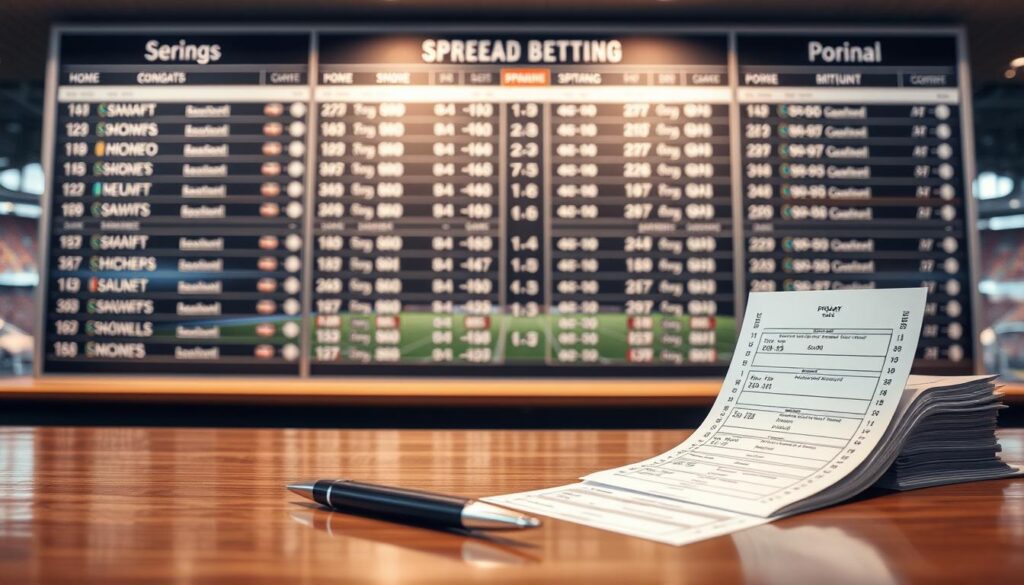
Sports Spread Betting
Think of point spreads as election margins. When the Eagles are -3.5 against the Cowboys, they need to win by more than that. The juice (that -110 you see everywhere) is like a coffee shop’s price: bet $105 to win $100, and the house keeps the $5.
Premier League games show why plus/minus matters. A team at -1.5 needs to win big like Manchester City. +1.5 lets them lose but respectably like last year’s Everton. The Warriors-Celtics rivalry? Golden State -4.5 means they’re expected to win by five – miss by half a point, and your bet is useless.
Three key spread elements:
- Negative numbers: The favorite (political incumbent)
- Positive numbers: The underdog (plucky challenger)
- Decimal points: The tiebreaker you didn’t know you needed
Canadian odds calculators show the truth: that -110 juice adds up fast. Bet $10? You need to win 52.4% just to break even – higher than Biden’s approval rating during midterms. Now that’s how sports spread betting works.
Types of Bets: Wall Street Meets the Sportsbook
Sports betting is like the New York Stock Exchange but with a sports twist. Each bet has its own risk level, from safe moneylines to risky parlays. It’s like the world of finance but with sports.
Core Investment Vehicles:
- Moneyline (The Index Fund): This is your “set it and forget it” bet. It’s about who wins straight-up, no spread. It’s like buying Apple stock in 2010.
- Point Spreads (Hedge Funds): Here, you bet on margins, not just outcomes. It’s like analyzing team “valuations” like a portfolio manager.
- Totals (Commodities Trading): This bet is about whether scores go over or under a set number. It’s like trading pork belly futures in sports betting.
| Bet Type | Risk Level | Skill Required | ROI Timeline |
|---|---|---|---|
| Moneyline | Low | Basic | Immediate |
| Prop Bets | Variable | Specialized | Event-Based |
| Parlays | Extreme | Luck | Long Shot |
Prop bets are like cryptocurrency in sports betting – unpredictable but tempting. They’re like betting on anything from a quarterback’s shoe color to the first holding penalty. It’s fun but not a solid strategy.
Common Sports Betting Mistakes:
- Parlay Addiction: Betting on 10-leg “sure things” is like risking your savings on meme stocks. Canada’s guides show 78% of new bettors lose here first.
- Weather Ignorance: MLB rainout rules can ruin a “lock” fast. Always check the forecast like you’d watch the Fed’s rates.
- Emotional Trading: Betting on your hometown team “because it feels right” is like investing in Blockbuster in 2007.
Yahoo’s risk analysis shows 43% of betting losses come from mismatched bet types. Would you buy junk bonds without knowing Treasury notes? Master moneylines and spreads first. Your bank account isn’t a Silicon Valley Bank account.
First Steps: Making Your First Wager
Placing your first sports bet should be easy and familiar, like ordering coffee. It should not be scary or life-changing. Imagine it like James Bond – exciting but controlled. Remember, you won’t win your retirement on a Tuesday night baseball game.
Start with small bets, like a Tinder date. Keep stakes low and have a plan to stop if needed. Here’s how to bet safely and avoid trouble:
- Set your “unit size” like a 401k contribution: Start with 1-2% of your bankroll. If you have $500, bet $5-$10. It’s enough to matter but won’t hurt your wallet.
- Choose your platform like a Venmo request: Look for instant deposits and clear fees. Canadian sites show responsible gambling info first – follow their lead.
- Track outcomes like a fantasy football league: Use spreadsheets to keep track. More on apps later (they’re better than your ex’s Spotify wrapped).
The table below shows beginner-friendly bets. It’s like the “Martini Principle” – exciting but not overwhelming:
| Bet Type | Risk Level | Recommended Stake | Exit Strategy |
|---|---|---|---|
| Moneyline | Low (Coffee Date) | 1-2 units | Stop after 3 consecutive losses |
| Spread | Medium (Dinner & Movie) | 0.5-1 units | 24-hour cooling off period if down 5 units |
| Parlay | High (Vegas Wedding) | 0.25-0.5 units | One per weekend max |
Sportsbooks want you excited. But you should stay calm and read the terms. Canadian sites offer reality-check popups – use them to bet safely, even if you’re in Buffalo.
Pro tip: Use slow payment methods like bank transfers over crypto. This helps you bet wisely, not recklessly. Now, go place your first bet and enjoy a martini. Shaken, obviously.
Emotional Control in Betting
Ever feel like sports betting is like watching a trashy reality TV marathon? You keep watching even though it’s bad. That’s tilt, where logic disappears. Let’s look at Netflix’s recommendations, crypto FOMO, and The Big Short‘s mortgage bubble.
Tilt works like a rogue algorithm that gets worse the more you scroll. Lose three bets and you might bet on Mongolian ping-pong at 4AM. It’s the same as chasing dopamine with crypto or meme stocks.
The Rational vs. Emotional Bettor Playbook
| Situation | Rational Approach | Emotional Response |
|---|---|---|
| 3-Loss Streak | Review betting log Adjust bankroll rules |
Chase losses with 5x bets |
| Unexpected Win | Reallocate 50% profit Stick to strategy |
Assume “hot hand” fallacy Overbet next game |
| Controversial Call | Analyze referee trends Update models |
Rage-bet against same team |
Remember the Big Short scene where Steve Carell’s team finds out the housing market was a scam? Emotional betting is like that. That “sure thing” parlay? It’s as shaky as a 2008 subprime mortgage.
Here’s your cooling-off toolkit inspired by iPhone’s Screen Time:
- Set a loss limit that triggers auto-lockouts (use app blockers)
- Make yourself review patterns after X bets (like iOS alerts)
- Use a “Downtime” mode for analysis, not betting
Pro Tip: Bookmark ConnexOntario’s gambling helpline. It’s for when you need it, not now. Smart planning beats desperate betting.
How to Track Bets/App Recommendations
Tracking bets with spreadsheets is like being the Milton Waddams from Office Space. He’s the guy who loves TPS reports too much. Today, tracking apps are like the Swingline staplers of bankroll management. They’re simple, satisfying, and actually useful.
Three things set apart casual bettors from sharp players:
- Real-time updates (no manual entry)
- Odds comparison engines (Yahoo’s Canadian cousin does this best)
- Emotion-proof analytics (your gut feeling lies)
Yahoo Sportsbook is my top pick for its clean design. It doesn’t play psychological games. Their profit/loss charts are like a financial dashboard – if Bloomberg Terminal had prop bets and humor. BetMGM’s tracker is like Tony Soprano’s accountant: brutally honest but won’t make you sleep with the fishes.
Pro tip: Enable two-factor authentication on any betting app. Nothing ruins a winning streak faster than your cousin Larry “borrowing” your account for his parlay dreams.
These tools are more than fancy calculators – they’re behavioral mirrors. If your tracker shows you’ve lost 11 straight NBA unders, it’s time to ask: Are you analyzing trends, or just praying to the basketball gods?
Common Pitfalls New Bettors Face
New sports bettors often make mistakes like Bernie Lomax in Weekend at Bernie’s. They’re too optimistic and don’t see the disaster coming. Let’s look at three rookie errors that can quickly ruin a bankroll.
The “Guaranteed System” Delusion: These schemes are like horoscopes for sports fans. They’re vague and can fit any outcome. Remember Theranos? Tipster scams promise the world but deliver nothing. If a strategy worked, casinos would ban it fast.
Confirmation bias hits bettors hard. We pick wins like MSNBC and Fox News pick facts. That 4-team parlay that hit? It’s not skill – it’s just luck.
Canada’s gaming commissions warn about parlay addiction. It’s like buying lottery tickets. Yahoo Finance says 68% of bankrupt bettors ignored basic bankroll management rules. Treat your money like a start-up’s seed round.
| Pitfall | Why It Fails | Pro Fix |
|---|---|---|
| Chasing Losses | Emotional doubling down (see: 2008 housing market) | 5% max per play |
| Tipster Worship | No insider trades 24/7 profit | Verify 12-month records |
| Overcomplicating Bets | Parlays = financial Russian roulette | Stick to single moneylines |
| Bankroll Neglect | Bet sizing = portfolio management | Use unit system |
| Outcome Bias | Winning wrong ≠ smart | Track decision quality |
Protesters at Wall Street had better financial plans than many rookie bettors. Treat each bet like a stock trade. Would you risk your 401(k) on a meme coin? The house edge is just gravity. Jump wisely.
Responsible Wagering
Betting should be fun, like a Netflix subscription. But, it can turn bad if you lose control. The key to bet safely is to be disciplined, like brushing your teeth every day. Let’s look at ways to bet wisely, avoiding the pitfalls of addiction.

For newbies in sports betting for beginners, it’s not just about saying no. It’s about using the right tools. ConnexOntario’s rules are like vaccines for your bankroll:
- Deposit limits = financial condoms
- Self-exclusion lists = betting blocker apps
- Reality checks = calendar alerts for your impulses
Chasing losses is like chasing a bad habit. It’s addictive and can ruin you. Here’s how experts protect themselves:
| Tool | Real-World Equivalent | Protection Level |
|---|---|---|
| Daily Loss Caps | Roth IRA Contribution Limits | 401(k)-grade security |
| Cool-Off Periods | Instagram Detox Weeks | Mental health SPF 50 |
| Activity Statements | Apple Screen Time Reports | Financial mirror selfies |
Smart betting is like smart investing. You wouldn’t risk your retirement on risky stocks. The sports betting for beginners rule is to bet like you’re giving your teen an allowance. It should be fun, but not too much.
When you want to win back your losses, think twice. Would you take this risk if you were wearing a hazmat suit? RG tools are like your inner voice, warning you not to blow your budget.
Next Steps
Think of your betting journey like a video game—you’ve completed the tutorial. Now it’s time to join the multiplayer arena. Let’s upgrade your strategy from tee-ball swings to major league fastballs.
First stop: The minor leagues of knowledge. Podcasts like Puck Portfolio break down hockey analytics with the intensity of a playoff overtime breakdown. Imagine Moneyball meets TED Talk, but with more fist bumps.
North American prediction hubs (looking at you, Canada’s sharpest oddsmakers) offer daily insights sharper than a blackjack dealer’s creased smile. Pair these with forums that blend Reddit AMA energy with fantasy draft room camaraderie. Pro tip: Treat these spaces like a sports betting guide cocktail party—listen twice as much as you speak.
- Podcast Power: The Line Change (NHL deep dives)
- Forum Gold: r/SharpSquare (think Vegas insiders meets MIT mathletes)
- Data Labs: Baseball Savant’s spin rates, PFF grades for NFL trench warfare
Advanced metrics aren’t just spreadsheets—they’re your X-ray glasses. That .312 batting average? Cool. The 94th percentile barrel rate? Now we’re cooking with gas. This is where beginner sports betting tips evolve into Jedi mind tricks.
Remember: The best bettors treat knowledge like bourbon—sipped slowly, never slammed. Next time you see a -110 line, you’ll smirk like someone who gets the punchline.
Resources/Communities
This sports betting guide is like a Michelin-starred map for odds and parlays. It’s like having Kayak for travel, and OddsJam for comparing prices. Reddit’s r/sportsbook is like a street taco stand for real-time talks. Action Network is like a sommelier, serving up curated data.
Canada’s betting tools index shows great finds like SharpRank’s audit system. It’s like Consumer Reports for sportsbooks. GambleTracker is like an accountant, tracking wins like a Vegas pit boss. Yahoo offers free courses on spreads and totals, like Ivy League classes.
New bettors often wonder where to find reliable info without the fluff. The answer is simple. Follow Washington Post-level analysis from independent sources. Join Discord groups for debates like philosophers discussing Kant. Oddspedia offers live-market snapshots as sharp as a Leica lens.
This guide is like Strunk & White for beginner sports betting tips. It’s concise, authoritative, and sometimes sassy. Use it like a library card to access important resources. Try tracking apps like sampling small plates. Debate prop bets with the same rigor as a Supreme Court case. When ready, dive into communities for real education: cold takes, hot stats, and no sugar-coating.
Your move. Will you be a tourist throwing darts or a local who knows the secret sauce? The tools are there. The plays are yours to make.
Leave a Reply