
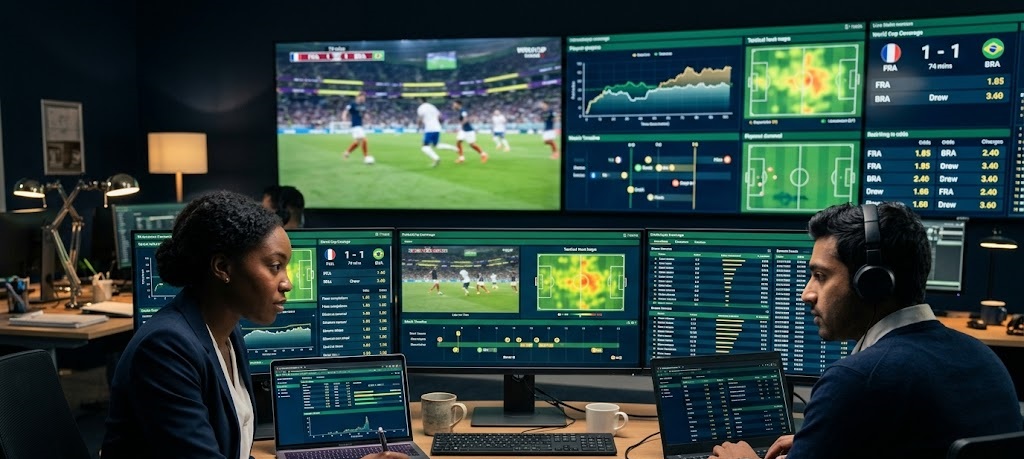
The World Cup is not just the biggest soccer tournament on the planet. For bettors, it is one of the most intense live betting classrooms available.
The 2026 FIFA World Cup will be larger than any edition before it, with 48 teams, 104 matches, and games spread across Canada, Mexico, and the United States. That expanded format creates more betting windows, more in-play markets, more emotional swings, and more chances for bettors to confuse excitement with strategy.
That is why the World Cup is such a useful test. It forces bettors to deal with everything that makes live betting difficult: fast odds movement, national-team bias, injury news, tactical substitutions, referee decisions, red cards, fatigue, weather, travel, and the pressure of knockout soccer.
Live betting can be useful when approached with patience and structure. It can also become expensive when bettors chase momentum without understanding why the market is moving. The difference is not luck. The difference is preparation.
Why World Cup Live Betting Feels Different
Most regular-season betting happens inside familiar rhythms. Bettors know the leagues, the teams, the schedule, the injury patterns, and the typical market behavior. The World Cup breaks that rhythm.
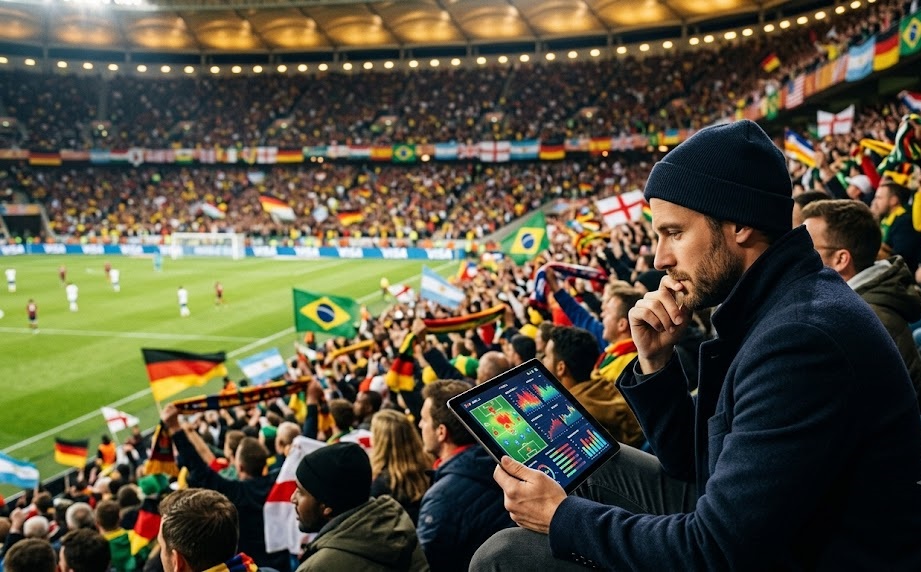
National teams do not play together every week. Some squads are loaded with club stars but lack chemistry. Others are tactically organized, physically disciplined, and built for tournament survival. A casual bettor may overvalue famous names, while the live market may react more sharply to structure, substitutions, and game state.
That is where smarter live betting begins. The question is not simply, “Who is better?” The sharper question is, “What changed inside the match that the pregame price did not fully capture?”
That could be a favorite struggling to break down a low block. It could be an underdog becoming more dangerous after halftime adjustments. It could be a team protecting a lead and inviting pressure. It could also be a red card that completely changes possession, shot volume, and expected scoring chances.
The World Cup exposes lazy assumptions quickly. A big badge does not guarantee control. A smaller nation is not automatically overmatched. A loud crowd does not always translate into better decisions. Live betting rewards bettors who watch the match instead of only watching the odds board.
The Bigger Format Creates More Market Pressure
The 2026 tournament runs from June 11 to July 19, beginning in Mexico City and ending with the final in New York New Jersey, according to the official FIFA World Cup 2026 match schedule. That longer, larger tournament structure matters for betting strategy.
More matches mean more markets, but they also mean more fatigue for bettors. A World Cup day can include multiple games, different kickoff times, different time zones, and very different betting profiles. A disciplined bettor cannot treat every match as equally bettable.
Some games are ideal for pregame analysis. Others become clearer after 15 or 20 minutes. Some are best left alone entirely.
The global scale also forces sportsbooks to prepare for unusual demand. As the tournament becomes a worldwide betting event, platforms have to manage traffic, pricing, trading teams, payment activity, and live market stability. That broader industry pressure is part of why World Cup sportsbook preparation becomes such an important behind-the-scenes story.
For bettors, the lesson is simple: when the market is moving fast, do not assume every shift is a mistake. Sometimes the sportsbook is correcting. Sometimes the market is reacting to real pressure. Sometimes public money is simply flooding toward the emotional side.
The skill is learning which is which.
What Smart Live Bettors Watch During World Cup Matches
Live betting is not about reacting to every attack, every shot, or every roar from the crowd. It is about identifying whether the match is developing differently from what the odds suggested before kickoff.
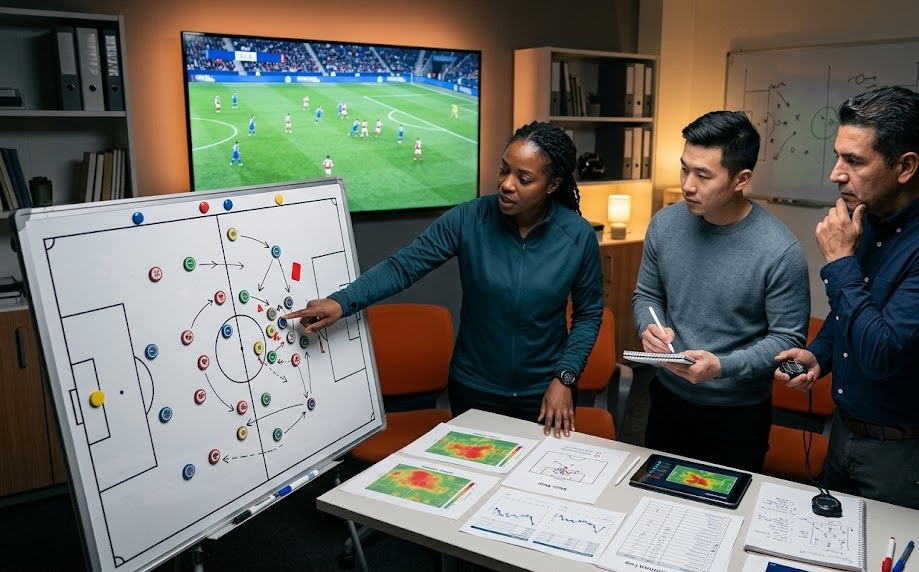
A favorite may dominate possession but create very little. An underdog may barely have the ball but generate the cleaner chances. A team may lead 1-0 while losing control of midfield. Another may be down a goal but clearly building pressure.
That is why scoreboard-only betting is dangerous. The score matters, but it is not the whole story.
| Match Signal | What It Can Mean For Live Betting |
|---|---|
| Early goal | Odds may overcorrect if the leading team changes its shape too soon |
| Red card | Possession, tempo, and shot volume can shift dramatically |
| Heavy favorite with low shot quality | The live price may still be too short if pressure is not producing chances |
| Underdog creating counterattacks | Draw or double-chance markets may become more interesting |
| Late substitutions | Fresh attackers or defensive changes can reshape totals and props |
| Knockout-stage extra time risk | Bettors need to think beyond 90-minute markets |
The smartest live bettors are not trying to predict every second. They are trying to understand whether the match state supports the price being offered.
That is also why odds education matters before tournament betting begins. Bettors who need a stronger foundation can review this sports betting odds and markets guide before trying to interpret fast-moving World Cup prices.
National Bias Is the Enemy of Live Betting Discipline
The World Cup creates emotional betting like no other soccer event. People bet on their home country. They bet against rivals. They bet on star players they love watching. They chase goals because the atmosphere feels too big for a match to stay quiet.
That emotional pull is exactly why live betting discipline matters.
A bettor watching the United States, Mexico, Canada, Brazil, Argentina, England, France, Spain, or Portugal may feel like every attack means something bigger than one possession. But sportsbooks are not pricing nostalgia. They are pricing probability.
A smart bettor has to separate fandom from value. Supporting a team is fine. Letting national pride decide a live wager is not strategy.
One practical way to avoid this mistake is to write down a match plan before kickoff. Decide what you would need to see before placing a live bet. For example, would you bet a favorite only if it creates consistent chances? Would you consider an underdog only if it survives the first 20 minutes without being pinned deep? Would you avoid betting your own national team entirely?
That kind of pre-match discipline protects bettors from making decisions in the loudest moments.
Live Betting Strategy Should Start Before Kickoff
The best live bets usually begin with pregame preparation. Bettors should know the basic team profile before the match starts. Does one team press high? Does another defend deep? Is either side dependent on one creator? Are there fitness concerns? Is the match being played in heat, altitude, or a stadium where travel could matter?.
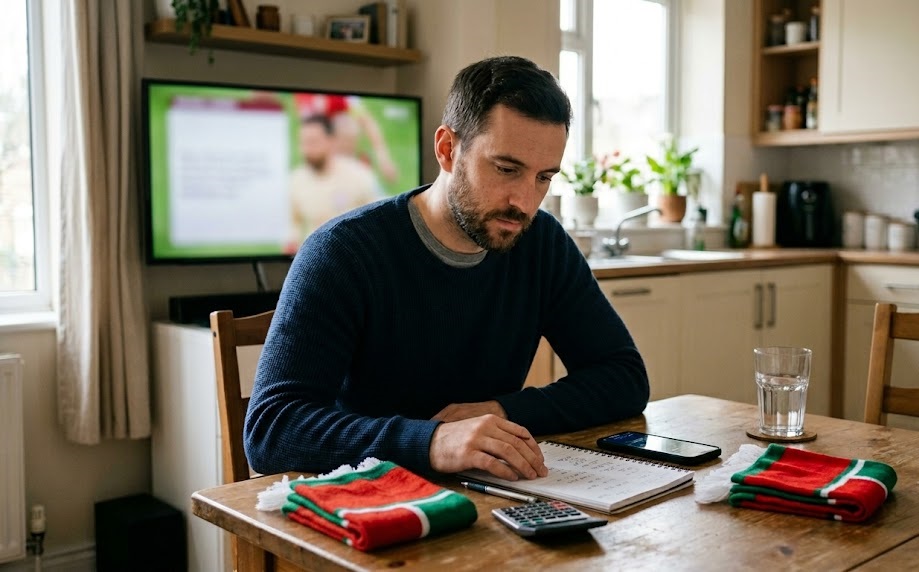
World Cup betting is not only about talent. It is about context.
A team that looks strong on paper may struggle if its midfield cannot handle pressure. A team with less possession may still be dangerous if its forwards are built for transition. A favorite may become vulnerable if it needs to chase the match and leaves space behind.
Before betting live, a bettor should understand the market options available:
Moneyline markets react heavily to score and time remaining.
Totals markets react to pace, chance quality, and match openness.
Both teams to score markets depend on whether both sides are creating real chances.
Player props can change after substitutions, cards, or tactical shifts.
Next goal markets can become volatile after a red card or momentum swing.
The point is not to bet all of them. The point is to know which market best matches what is happening on the field.
The Knockout Stage Is a Different Betting Environment
Group-stage matches and knockout matches do not behave the same way. Group-stage teams may play for goal difference, qualification scenarios, or rotation. Knockout-stage teams often become more cautious because one mistake can end the tournament.
That changes live betting strategy.
A 0-0 knockout match after 60 minutes does not always mean a goal is coming. Sometimes it means both teams are comfortable delaying risk. A favorite trailing late in a knockout match may push numbers forward, but that can also create counterattacking value on the other side.
Extra time and penalty shootout possibilities also create confusion for beginners. Bettors must understand whether their market is based on 90 minutes, extra time, or tournament advancement. Misreading the market rules is one of the easiest ways to make a poor World Cup bet.
This is where patience matters. Not every dramatic match needs a live wager. Sometimes the smartest strategy is recognizing that the price no longer offers enough value.
How to Build a Smarter World Cup Live Betting Checklist
A strong live betting checklist should be short enough to use during a match but clear enough to prevent impulse decisions.
Use it to ask:
Is the live price reacting to the score, or to the actual match flow?
Has one team’s tactical approach clearly changed?
Are substitutions improving chance creation or simply adding fresh legs?
Is the favorite creating high-quality chances or just harmless possession?
Is the underdog defending well or merely surviving?
Has emotion pushed the public toward an obvious but overpriced side?
Those questions help bettors slow down. And slowing down is often the biggest edge in live betting.
The World Cup makes everything feel urgent. Odds flash. Markets suspend. Crowds erupt. Social media reacts instantly. But urgency is not the same as value.
The Smarter Way To Treat World Cup Live Betting
The World Cup is the perfect test for live betting because it gives bettors everything at once: elite talent, unfamiliar matchups, emotional narratives, tactical variety, and fast-moving markets. It rewards preparation and punishes guessing.
A smarter bettor does not need to bet every match. They do not need to chase every goal. They do not need to prove they saw momentum before everyone else.
They need a plan, a bankroll limit, a reason for every wager, and the discipline to pass when the price does not match the match.
That is the real lesson of World Cup live betting. The tournament may be global, emotional, and unpredictable, but the best strategy remains simple: watch carefully, bet selectively, and never let the moment become bigger than the math.
Leave a Reply